
DetailOAR Field Manual · Estimating and sales
How to Quote Jobs, Explain Value, and Handle Price Objections
Turn what you see on the vehicle and what the customer wants into a written scope, explain your recommendation, and take price pushback without arguing or discounting on reflex.
Save or use this guide
Contents
Start
Know the outcome.
Send timely, specific estimates with assumptions, options, proof, and approval steps, plus a calm way to handle objections.
Audience, time, and cost
Owners who quote by text off one photo, burn hours on vague back-and-forth, or drop the price the moment a prospect hesitates.
Time and costStandard work can quote in 20 minutes; correction, coating, rough condition, or custom work may need an in-person test or inspection.
Before you start
Have your scope, price rules, inspection questions, expiration, deposit, and policies defined, plus who’s allowed to adjust a price.
Tools and materials
- inspection form
- estimate template
- photo upload
- service scope
- pricing matrix
- policies
- proof of process
Steps
Do the work in order.
-
Step 1 Confirm the desired result
Ask what’s bugging them, what “done” looks like, their timing, the vehicle’s history, and any budget limits they care to share.
-
Step 2 Inspect or request useful evidence
Gather vehicle details and well-lit context and close-up photos. Where the outcome is uncertain, insist on a test spot or hands-on inspection.
-
Step 3 Select the right scope
Pick the smallest safe service that can still deliver the agreed result, and keep optional protection or convenience items separate.
-
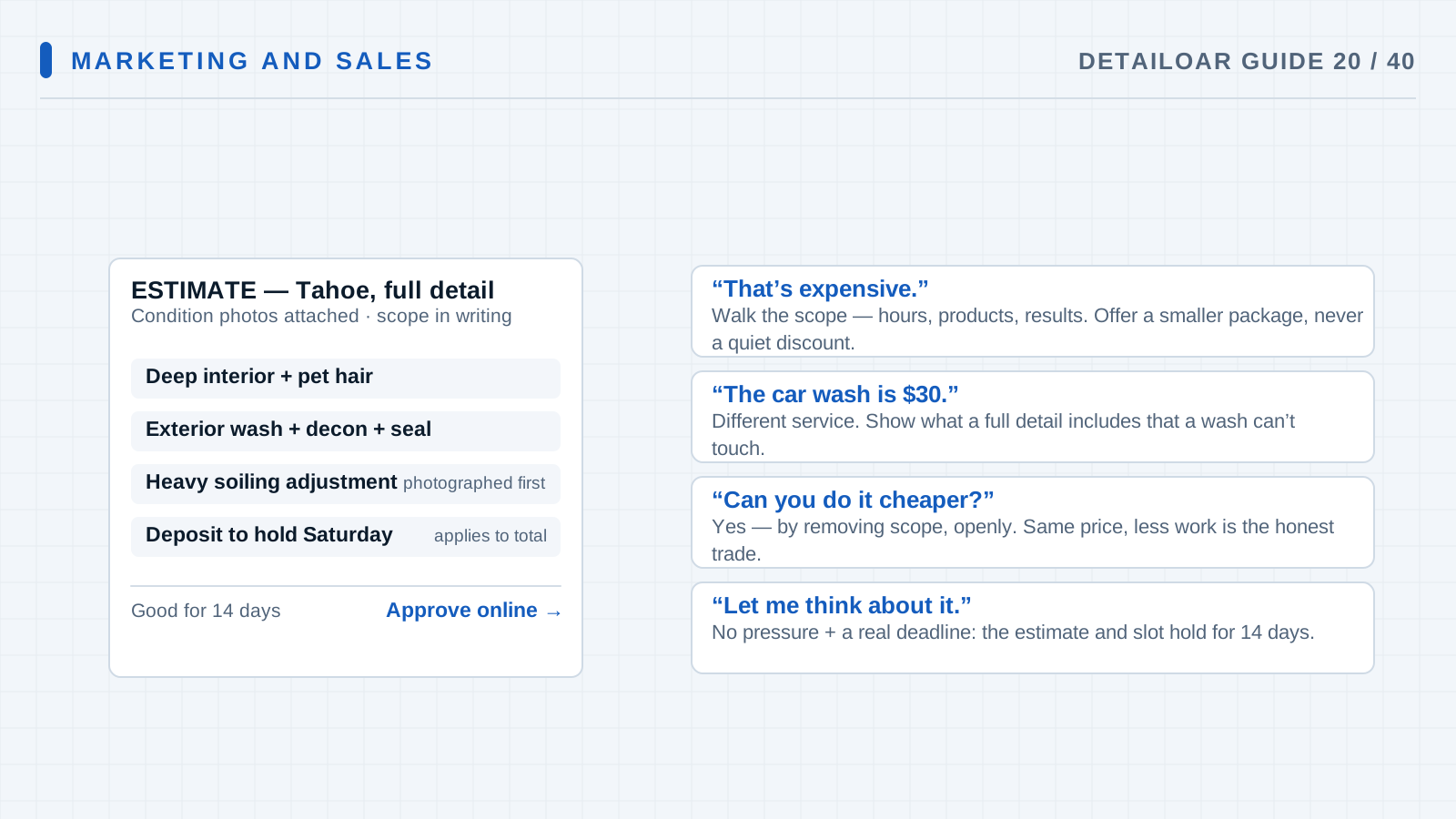
Step 4 Write the estimate
Spell out condition, included work, exclusions, price, tax, deposit, schedule, expiration, policies, the improvement to expect, and how to approve.
-
Step 5 Explain value in process terms
Point to evidence: documented check-in, controlled prep, the test spot, material choice, trained hands, QC, aftercare, follow-up. Skip the empty superlatives.
-
Step 6 Handle the objection
Ask which concern matters most: total budget, the scope, or another option. Acknowledge it, explain the difference, and offer a smaller honest scope or a timing change when that fits.
-
Step 7 Set a respectful follow-up
Confirm how long the estimate stays good, the next available action, and one or two useful follow-ups before you close the opportunity out.
Reference
Use the detail when you need it.
How it works
A professional quote draws a line from what you saw and what they want to a defined process and price. Handling an objection means finding the real concern first (budget, trust, timing, scope, a competing quote, or priority) and then clarifying fit without trashing competitors.
Terms used in this guide
- Estimate assumptionA fact you price as if it’s true, like vehicle size or the condition they described, that may still need confirming.
- Option framingOffering meaningful levels of result instead of arbitrary bundles.
Common mistakes
- Quoting off one close-up photo.
- Sending just a total price.
- Overpromising defect removal.
- Bad-mouthing the cheaper competitor.
- Cutting price before you know the real concern.
- Letting an expired quote float forever.
Troubleshooting
- The customer has a much lower quote in handAsk whether the scope, condition assumptions, materials, documentation, aftercare, tax, and warranty actually match yours, then let them choose. No trash talk.
- The budget can’t reach the recommended resultOffer a clearly limited safe alternative, phase the work where that’s technically sound, or decline. Don’t quietly strip out prep the job needs.
- Condition is worse at check-inStop, document the difference, explain what it changes, send a change estimate, and only continue once it’s approved.
Finish
Check the result and close the loop.
What good looks like
- Scope matches the condition and the goal.
- Question marks and exclusions sit in plain view.
- Each option delivers a distinct result.
- The price story leans on process and proof.
- Even the lowest option is safe and worth buying.
- Approval and deposit get recorded.
Final checklist
- Goal confirmed
- Evidence collected
- Scope and exclusions written
- Price, tax, and deposit clear
- Expected result honestly framed
- Approval method included
- Follow-up date set
What to do next
- Set up add-on recommendation triggers.
- Turn approved estimates into scheduled jobs.
- Study your objection and lost-reason patterns.
More
Continue only where it helps.
Prerequisites
How to Price Detailing Services Without Guessing16 min readLead Response Scripts for Calls, Text Messages, and Direct Messages15 min readLearning paths with this guide
Get Your First 20 Customers9 guidesFrequently asked questions
Should I offer good, better, and best?
Only when every option is technically sound and delivers a distinct result. Never design a lowest tier that’s built to fail.
How long should an estimate remain valid?
Pick a window your material costs, schedule, and policy can support, and say it plainly. Reinspect if the condition or your assumptions may have shifted.
Is discounting ever appropriate?
It can be, when it’s tied to a deliberate promotion, a reduced scope, scheduling efficiency, or written policy. Not as a reflex every time someone hesitates.
Sources and review
Reviewed by DetailOAR Editorial Review on July 15, 2026. Verify current labels, interfaces, prices, and local requirements before acting.
Related field guides
 Marketing and SalesHow to Upsell Services Without Sounding PushyRecommend add-ons your inspection actually supports, walk through the tradeoffs, and keep no an easy answer while the original result stays protected.
 Detailing SkillsVehicle Check-In, Inspection, and Damage DocumentationA calm, repeatable check-in that confirms who and what you’re working on, records the condition the car arrived in, keeps media private, and gets acknowledgment before work begins.
 Business FoundationsDeposits, Cancellations, Weather, Damage, and Customer PoliciesWrite customer policies people can actually read: deposits, schedule changes, mobile weather, vehicle condition, valuables, damage documentation, and disputes.