
DetailOAR Field Manual · Customer policies
Deposits, Cancellations, Weather, Damage, and Customer Policies
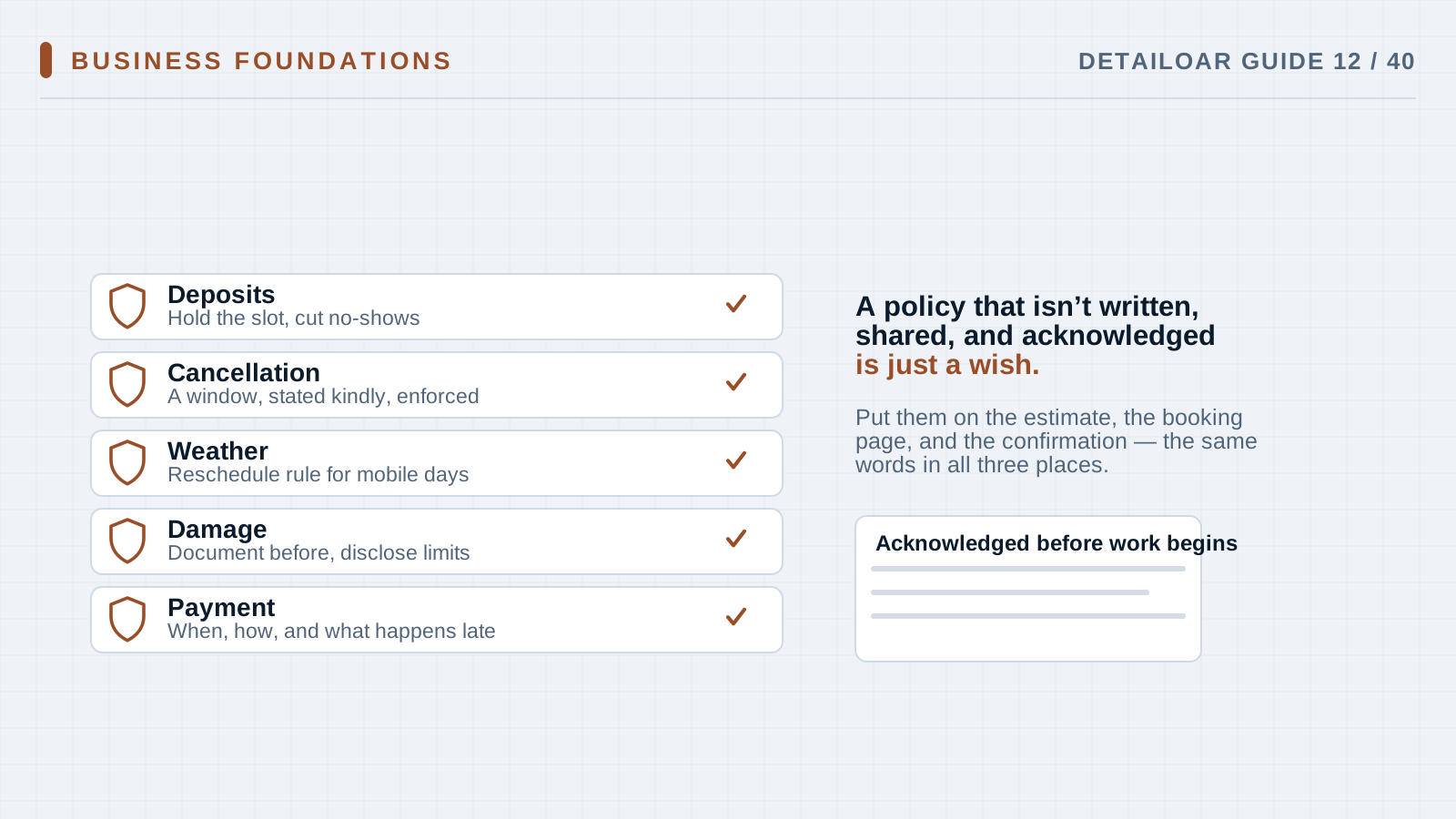
Write customer policies people can actually read: deposits, schedule changes, mobile weather, vehicle condition, valuables, damage documentation, and disputes.
Save or use this guide
Contents
Start
Know the outcome.
You’ll produce a plain-language policy set that customers see before they commit, and that gets recorded consistently on every job.
Audience, time, and cost
Owners who take reservations, block out multi-hour capacity, work outdoors, store vehicles, or need a fair process for pre-existing and alleged damage.
Time and costDrafting takes half a day. Qualified legal and insurance review costs vary, and it’s strongly recommended before you publish.
Before you start
Follow one imaginary job from booking to payment. Mark the estimate, drop-off or mobile arrival, inspection, change approval, completion, and any dispute, then read your actual insurance coverage.
Tools and materials
- policy worksheet
- customer journey map
- insurance requirements
- booking and payment workflow
- local professional review
Steps
Do the work in order.
-
Step 1 Map the decision points
Pin down when time gets reserved, supplies get committed, work begins, hidden condition turns up, weather changes, and the customer signs off on completion.
-
Step 2 Write the deposit terms
State the amount or rule, the due date, how it applies to the final balance, what happens on cancellation or a failed payment, and what happens if you cancel.
-
Step 3 Define cancellation and reschedule windows
Use clear timestamps, contact methods, and rules for late arrival, no-shows, reschedule limits, and any fee or deposit handling.
-
Step 4 Write the weather sentence
Fill in: “We make the call by [time]. If [unsafe condition or missing utility] stops the job, we move you to [priority window] under [deposit or fee rule].” Verify the limits and terms locally before publishing.
-
Step 5 Define vehicle prep and inspection
Cover valuables, child seats, personal items, alarms, keys, modifications, fragile surfaces, known defects, photos, and the customer’s acknowledgment.
-
Step 6 Define scope changes and damage response
Require written price and time approval for added work, and set immediate steps for damage concerns: stop, photograph, notify, mitigate, involve the insurer, and record the incident.
-
Step 7 Review, publish, and train
Get jurisdiction-specific review, show the policies before booking approval, hand over a copy, and train staff with real scenarios.
Reference
Use the detail when you need it.
How it works
Good policies put expectations on the table before the customer pays or blocks out a time slot. They set mutual responsibilities, objective timelines, approved communication, documentation, remedies, and escalation, and they do it without a single hostile or misleading line.
Terms used in this guide
- DepositMoney collected before the work is done, under stated terms. Whether it’s refundable depends on the agreement and applicable law.
- Change orderA documented, customer-approved change to scope, price, or schedule.
Common mistakes
- Copying a competitor’s terms wholesale.
- Stamping nonrefundable on every payment without legal review.
- Burying policy links until after checkout.
- Leaning on blanket damage waivers.
- Rewriting terms once a dispute has already started.
Troubleshooting
- A customer disputes the cancellation feeShare the policy version they accepted, the booking timeline, the communications, and a calm review path. Get legal advice when you need it.
- Weather turns during mobile workPause if safety or product limits are exceeded, protect the vehicle, document the conditions, and follow the agreed completion or reschedule process.
- New damage is allegedPreserve the before-and-after records, shut down speculation, notify the designated owner or insurer, and follow the written incident process.
Finish
Check the result and close the loop.
What good looks like
- Policies match your actual workflow and insurance.
- Consequences cut both ways and read plainly.
- Acceptance happens before payment or work.
- Inspection photos carry timestamps.
- Incidents follow a documented escalation path.
Final checklist
- Deposit terms reviewed
- Cancellation windows defined
- Weather and access plan written
- Inspection and valuables process written
- Change approval required
- Damage escalation documented
- Customer acceptance kept on file
What to do next
- Set up your deposits and cancellation rules.
- Train the inspection workflow.
- Revisit the policies annually and after any incident.
More
Continue only where it helps.
Prerequisites
Business Registration, Licenses, Insurance, and Basic Compliance18 min readHow to Price Detailing Services Without Guessing16 min readLearning paths with this guide
Start a Mobile Detailing Business13 guidesOpen a Detailing Shop11 guidesSet Up DetailOAR8 guidesFrequently asked questions
Can every deposit be nonrefundable?
Don’t assume so. Treatment depends on the agreement, the circumstances, payment rules, and your jurisdiction, so get qualified local advice.
Should customers sign a damage waiver?
Use a reviewed acknowledgment and inspection process instead. A blanket waiver doesn’t replace reasonable care or accurate incident handling.
Who decides a weather cancellation?
Your policy should name that decision-maker and the timing, while letting either side stop work that’s unsafe or outside product limits.
Sources and review
Reviewed by DetailOAR Editorial Review on July 15, 2026. Verify current labels, interfaces, prices, and local requirements before acting.
Related field guides
 Detailing SkillsVehicle Check-In, Inspection, and Damage DocumentationA calm, repeatable check-in that confirms who and what you’re working on, records the condition the car arrived in, keeps media private, and gets acknowledgment before work begins.
 Marketing and SalesHow to Quote Jobs, Explain Value, and Handle Price ObjectionsTurn what you see on the vehicle and what the customer wants into a written scope, explain your recommendation, and take price pushback without arguing or discounting on reflex.
 Detailing SkillsFinal Quality Control, Customer Handoff, and Working Faster Without Cutting CornersPut staged quality gates, a fixed final inspection route, an evidence-based handoff, and honest time studies to work — and raise throughput without deleting safety or quality.