
DetailOAR Field Manual · Local SEO
Local SEO for Detailers: A Beginner’s Step-by-Step Guide
Get found locally with a technically sound site, genuinely useful service and area pages, consistent business data, honest reviews, and smart internal links.
Save or use this guide
Contents
Start
Know the outcome.
Build a small keyword-to-page map and work through the technical, content, profile, link, and measurement pieces without churning out thin location spam.
Audience, time, and cost
Owners who want to be found locally for the long haul and can commit to accurate pages and a monthly tune-up.
Time and costThe first cleanup takes several days; judging results usually takes weeks or months. Nobody can guarantee organic placement.
Before you start
Have a working, accessible website, a verified profile, a defined service area, and real-world proof you have permission to use.
Tools and materials
- search console
- analytics
- site crawler or link checker
- keyword-to-page map
- service-area evidence
- original content
Steps
Do the work in order.
-
Step 1 Map real search tasks
Group terms by service, problem, business model, and location intent, using words customers actually say in real inquiries.
-
Step 2 Assign one useful page per intent
Map the homepage, service pages, guide hubs, and only the area pages that earn their keep. Don’t let several pages fight over the same search.
-
Step 3 Fix technical foundations
Go through HTTPS, mobile layout, titles, descriptions, canonicals, headings, image sizes and alt text, internal links, the sitemap, robots, 404s, and noindex on private pages.
-
Step 4 Write people-first service content
In your own words, cover the result, the scope, who it fits, the process, local logistics, how you price, proof, FAQs, and the next step.
-
Step 5 Strengthen local identity
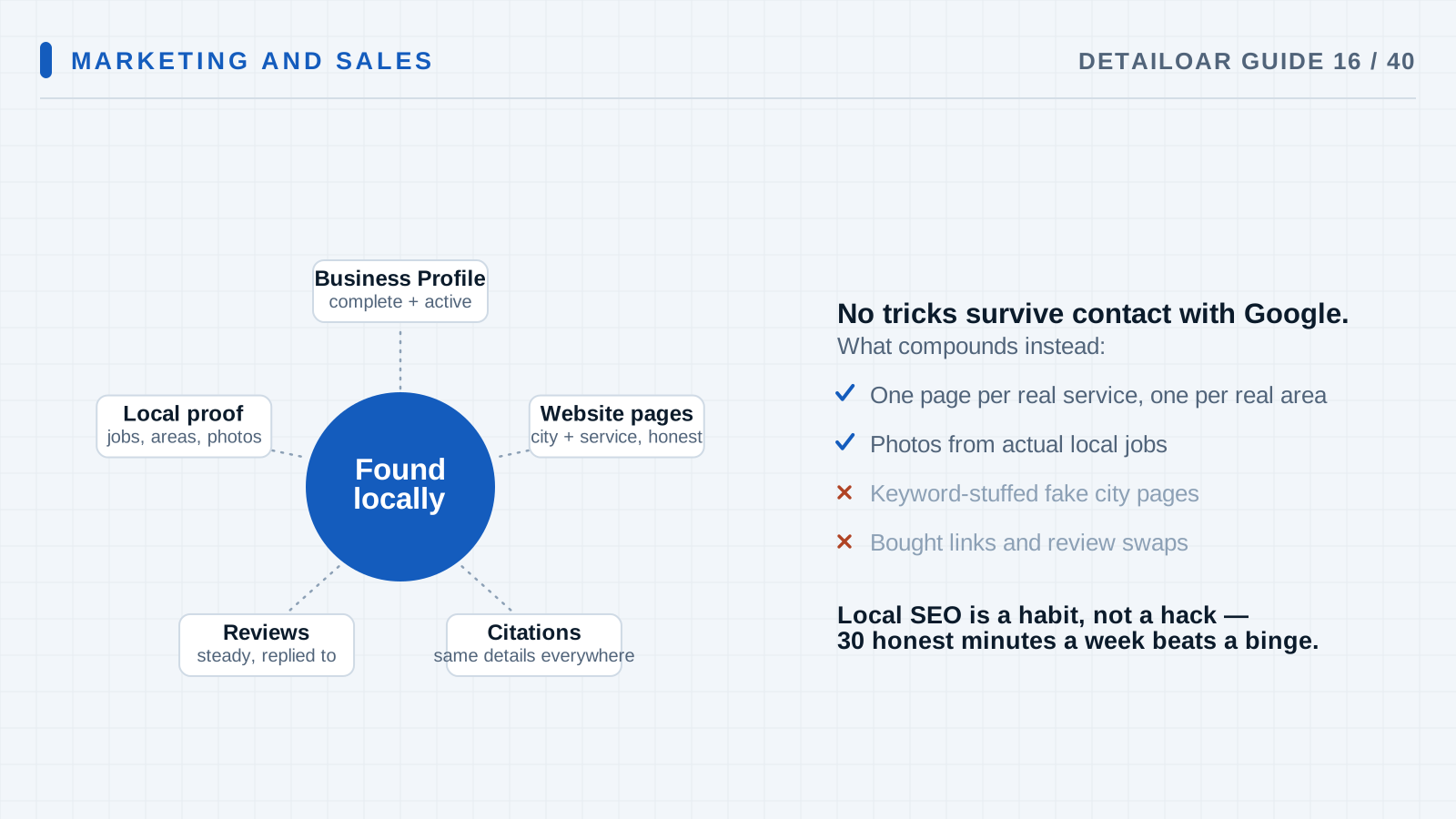
Keep your name, phone, address or service-area setup, hours, and website identical on the profile and a short list of legitimate directories or partners.
-
Step 6 Earn proof and links naturally
Ask for honest reviews after finished work, and earn relevant links through partnerships, associations, sponsorships you can prove, or resources people genuinely use.
-
Step 7 Measure leads, not rank screenshots
Each month, look at indexed pages, queries, clicks, calls, forms, booked jobs, and source quality. Rework weak pages around real customer questions.
Reference
Use the detail when you need it.
How it works
Local SEO matches each distinct search to the most useful truthful page you have. Search engines need crawlable structure and a consistent identity; people need complete answers and believable local proof. Repeating yourself across pages without adding local value gets you weak pages, not a strategy.
Terms used in this guide
- Search intentThe job a searcher is trying to get done.
- Canonical URLThe one public URL you prefer when page variants are mostly duplicates.
Common mistakes
- Publishing dozens of nearly identical city pages.
- Keyword-stuffing titles and headings.
- Buying junk links.
- Watching one keyword rank and nothing else.
- Forgetting conversion once traffic shows up.
Troubleshooting
- A page won’t indexBefore requesting indexing, check crawler access, canonical and noindex tags, the sitemap, duplication, quality, and the server response.
- Impressions climb but leads don’tRecheck intent match, service area, the mobile experience, scope, pricing clarity, proof, and whether your CTAs are tracked.
- Two pages keep trading places in resultsSharpen each page’s intent, merge the overlap, tighten internal linking, and set the preferred canonical where it makes sense.
Finish
Check the result and close the loop.
What good looks like
- Each search task has one preferred URL.
- Private CRM pages stay noindexed.
- Pages carry real local evidence, not copy-pasted city text.
- Business details match everywhere.
- Search and CRM data tie back to qualified leads.
- Updates make pages more useful, not just longer.
Final checklist
- Intent map created
- Preferred URLs assigned
- Technical crawl clean
- Service content written
- Profile and citations consistent
- Review and link work kept clean
- Monthly conversion review on the calendar
What to do next
- Publish a cluster of helpful guides.
- Rework pages around real lead questions.
- Keep reviewed dates and sources fresh on schedule.
More
Continue only where it helps.
Prerequisites
How to Build a Detailing Website That Turns Visitors Into Leads15 min readHow to Set Up and Improve a Google Business Profile14 min readLearning paths with this guide
Get Your First 20 Customers9 guidesFrequently asked questions
How long does local SEO take?
There’s no promised timeline. Technical fixes can get picked up fast, but competitive visibility and trust usually build over weeks or months.
Do I need pages for every town?
Only build an area page when you can add real substance for that place: unique service detail, logistics, proof, and customer value, not a swapped town name.
Should I hire an SEO company?
Only after the provider explains deliverables, access, ownership, measurement, and which tactics are off-limits. Keep your domains, profiles, analytics, and content in your own hands.
Sources and review
Reviewed by DetailOAR Editorial Review on July 15, 2026. Verify current labels, interfaces, prices, and local requirements before acting.
Related field guides
 Marketing and SalesHow to Take Before-and-After Photos That Sell the WorkShoot consistent, honest before-and-after photos that document condition, show off real workmanship, and keep your customers’ privacy protected.
 Marketing and SalesA Simple Social Media Content System for DetailersTurn everyday jobs and customer questions into a weekly content routine you can keep up, with permissions, captions that teach, and lead tracking.
 Business FoundationsHow to Design a Profitable Service MenuBuild a small service menu with clear outcomes, firm boundaries, capacity that fits, sensible add-ons, and standards your crew can deliver.