
DetailOAR Field Manual · Compliance
Business Registration, Licenses, Insurance, and Basic Compliance
Get organized on the registrations, permits, insurance, tax setup, environmental duties, and records your detailing business may need.
Save or use this guide
Contents
Start
Know the outcome.
You’ll build a compliance register for your own jurisdiction: responsible contacts, renewal dates, evidence on file, and the questions still open.
Audience, time, and cost
Owners launching or formalizing mobile, shop, or hybrid operations in the United States. If you’re elsewhere, the same process works with your own authorities.
Time and costResearch can eat several days, and approvals and insurance may take weeks. Fees vary widely with jurisdiction, entity, coverage, premises, vehicles, and payroll.
Before you start
Start a note with your ownership and location. Add your services, employees or contractors, vehicles, water use, chemical storage, and whether customers will visit the premises.
Tools and materials
- compliance checklist
- secure document storage
- owner identification
- business address
- service description
- vehicle and premises details
Steps
Do the work in order.
-
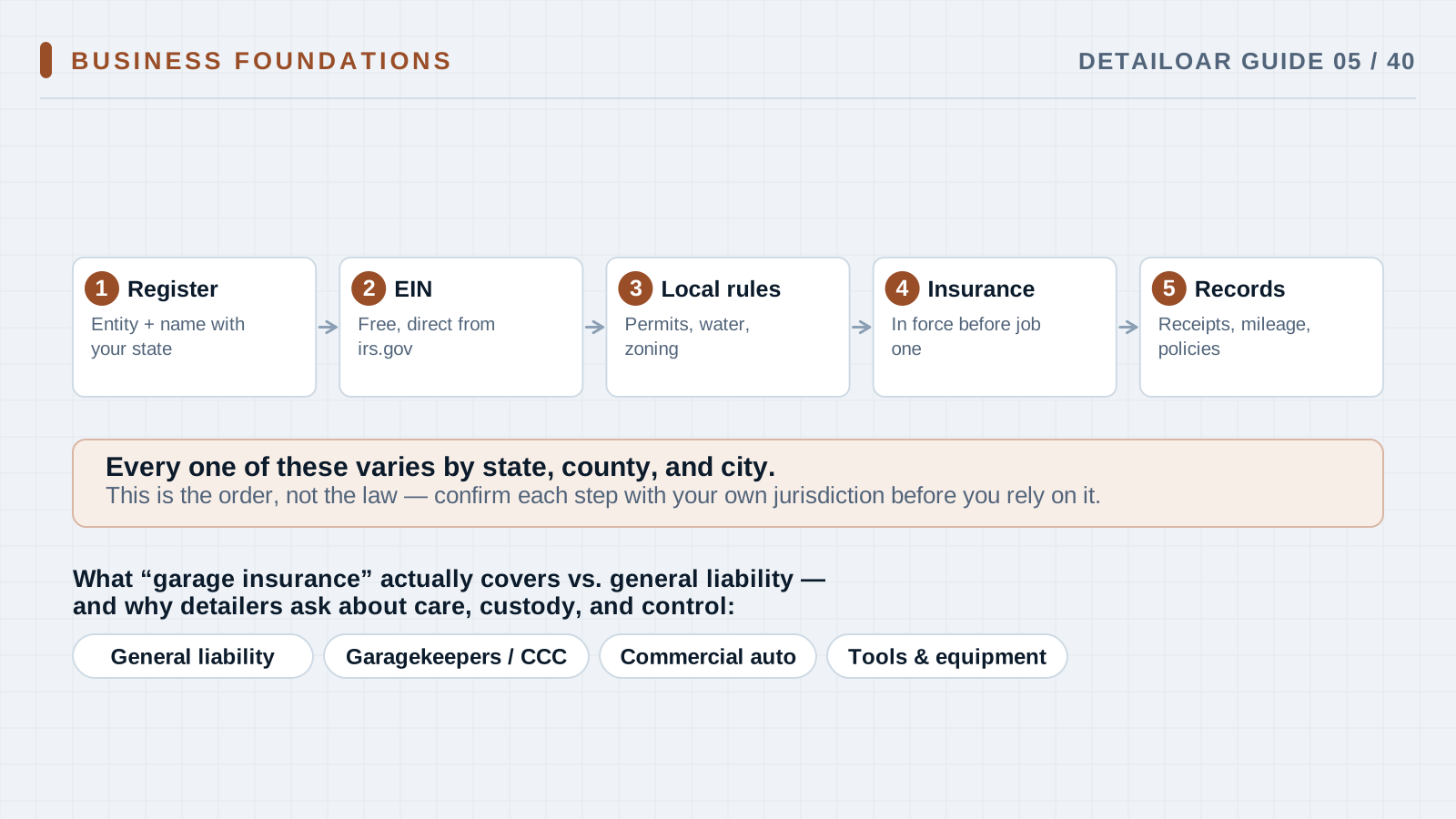
Step 1 Pin your first operating location
Write down where the business is based. Add every place it stores materials, parks vehicles, performs work, employs people, and discharges or hauls wastewater.
-
Step 2 Make the structure decision safely
Start with qualified advisers and work through the liability, tax, ownership, and filing consequences. Then register the chosen entity and trade name wherever required.
-
Step 3 Open one tax checklist
List the federal, state, and local tax IDs you may need. Confirm sales-tax treatment, payroll duties, and filing cadence with a qualified tax professional, then obtain the required IDs.
-
Step 4 Make the first authority call
Start with the authority most likely to affect your model, then work through the planning, zoning, licensing, fire, building, home-occupation, parking, and sign authorities that apply.
-
Step 5 Verify water, waste, and chemical rules
Walk the relevant environmental or public-works authority through your washing, runoff capture, sanitary-sewer disposal, hazardous waste, chemical quantities, and spill controls.
-
Step 6 Put the right insurance in place
Ask a commercial broker about general liability, garage keepers or care/custody/control, commercial auto, property, workers compensation, cyber, and umbrella needs, plus the exclusions.
-
Step 7 Create the compliance register
For each item, log the authority, owner, evidence location, renewal date, cost, and status, then set reminders 60 and 30 days ahead of every deadline.
Reference
Use the detail when you need it.
How it works
Compliance is a system you maintain, not a form you file once. Keep legal formation, tax accounts, operating permissions, environmental and wastewater rules, insurance, employment duties, and record retention in separate lanes so nothing slips between agencies.
Terms used in this guide
- Legal entityThe recognized ownership structure, like a sole proprietorship, partnership, or company, governed by local law.
- Certificate of insuranceA summary of coverage used as evidence. It doesn’t replace reading the actual policy and its exclusions.
Common mistakes
- Treating a generic online checklist as proof of local compliance.
- Carrying only personal auto or bare-bones general liability.
- Assuming an LLC does the job of insurance.
- Letting a permit or policy quietly lapse.
- Discharging wash water based on what competitors appear to get away with.
Troubleshooting
- Agencies give you conflicting answersAsk each one for the applicable rule and a written interpretation, note names and dates, and bring in qualified local counsel when the stakes are material.
- A broker doesn’t get detailing exposureHand them a written description of your services and vehicle custody, and look for a broker who knows auto-service businesses.
- A requirement makes the model uneconomicChange the location, service method, capture system, or operating model. Working outside the rules isn’t the workaround.
Finish
Check the result and close the loop.
What good looks like
- The legal name matches the bank, tax, insurance, and contracts.
- Activities and locations are disclosed exactly as they are.
- Wastewater has a documented, approved handling path.
- You’ve read the coverage limits and exclusions.
- Every renewal has an owner and a reminder.
Final checklist
- Entity and trade name verified
- Tax accounts and calendar set up
- Operating permissions documented
- Wastewater plan approved
- Insurance placed, exclusions read
- Employment duties checked
- Renewal register up and running
What to do next
- Fold compliance and insurance costs into the startup budget.
- Write customer policies that match your actual coverage.
- Train workers on SDS, spill, and incident procedures.
More
Continue only where it helps.
Prerequisites
Mobile, Shop, or Hybrid: Choosing the Right Detailing Business Model12 min readHow to Choose a Business Name, Domain, and Brand Position12 min readLearning paths with this guide
Start a Mobile Detailing Business13 guidesOpen a Detailing Shop11 guidesFrequently asked questions
Does an LLC protect me from every claim?
No. Entity protection has real limits, and it doesn’t replace safe operations, contracts, insurance, taxes, or personal responsibility for misconduct.
What insurance does a detailer need?
It depends: custody of vehicles, mobile or shop operations, staff, property, driving, and the services you sell all matter. A commercial broker should match coverage and exclusions to your actual risk.
Can wash water go into a storm drain?
Don’t assume it can. Rules vary, and storm drains often empty straight into waterways. Ask the relevant local authority for the approved capture and disposal method.
Sources and review
Reviewed by DetailOAR Editorial Review on July 15, 2026. Verify current labels, interfaces, prices, and local requirements before acting.
Related field guides
 Business FoundationsDetailing Business Insurance: The Coverage That Actually Protects YouWhat each kind of business insurance actually covers for a detailer — liability, customer vehicles, business auto, tools, and employees — and how to buy it with written quotes instead of guesses.
 Business FoundationsHow to Build a Realistic Detailing Startup BudgetBuild a cash-first launch budget that splits required, deferrable, recurring, and contingency spending, then tells you how long you can survive.
 Business FoundationsDeposits, Cancellations, Weather, Damage, and Customer PoliciesWrite customer policies people can actually read: deposits, schedule changes, mobile weather, vehicle condition, valuables, damage documentation, and disputes.