
DetailOAR Field Manual · Finance
How to Build a Realistic Detailing Startup Budget
Build a cash-first launch budget that splits required, deferrable, recurring, and contingency spending, then tells you how long you can survive.
Save or use this guide
Contents
Start
Know the outcome.
You’ll come away with a purchase plan, a monthly overhead forecast, an emergency reserve, and a minimum cash number that doesn’t hide your personal needs.
Audience, time, and cost
Owners deciding what to buy now, what to finance carefully, what to rent, and what can simply wait.
Time and costBudgeting costs nothing. Update it whenever your quotes or launch assumptions shift.
Before you start
Have your operating model and draft service list picked. Collect current supplier prices and note the source and date — screenshots and stale estimates don’t count.
Tools and materials
- spreadsheet
- calculator
- written supplier quotes
- insurance estimates
- personal cash needs
Steps
Do the work in order.
-
Step 1 Set the cash boundary
Write down your available cash, the personal emergency savings you will not touch, your borrowing limit, and your target opening date.
-
Step 2 List every launch category
Cover registrations, professional advice, insurance deposits, vehicle or lease costs, improvements, equipment, chemicals, PPE, wastewater controls, branding, software, and initial marketing.
-
Step 3 Classify every purchase
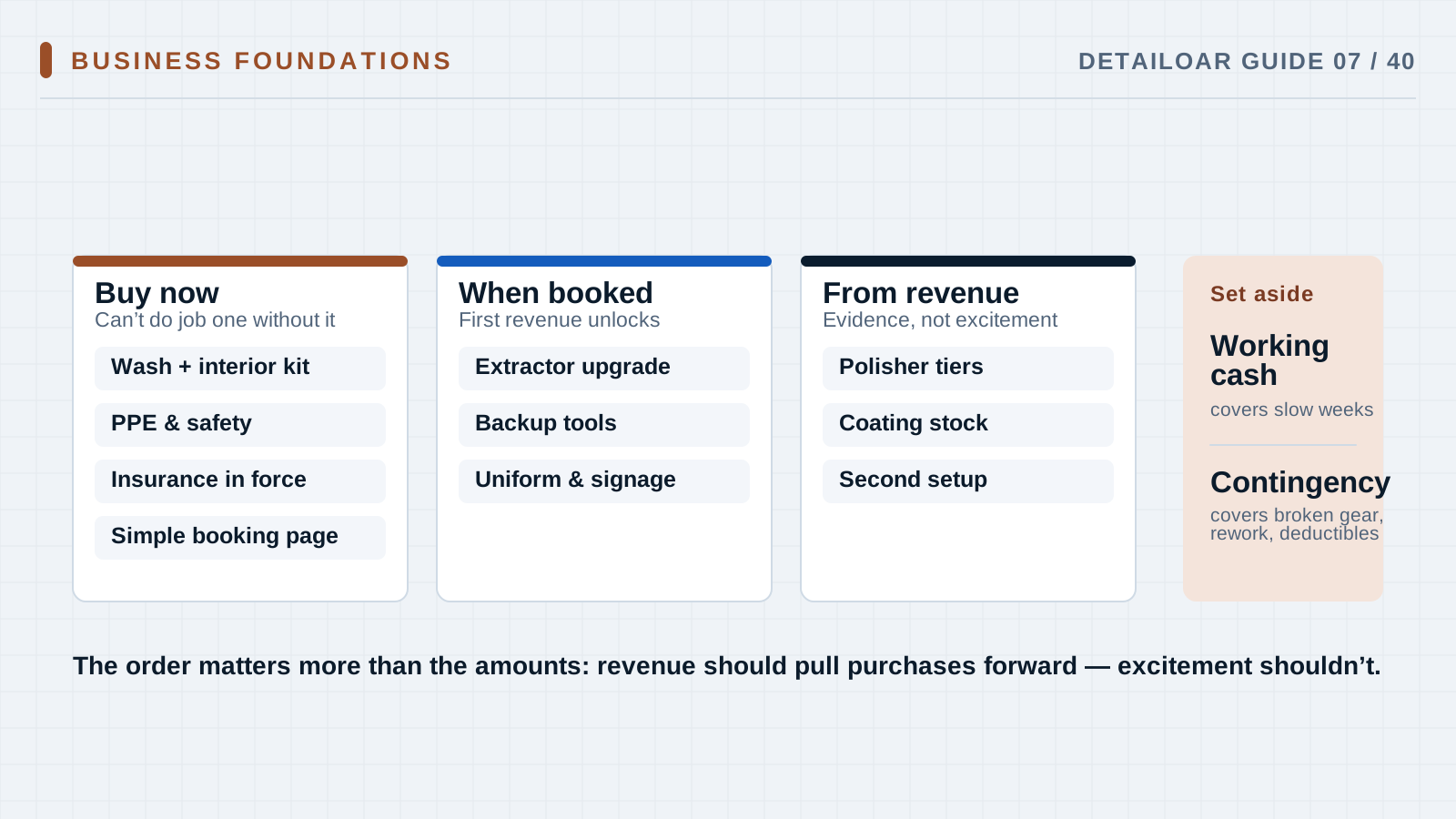
Tag each item: needed before the first job, needed by a date, rentable, covered by something you already own, or optional until revenue shows up.
-
Step 4 Build the monthly cash outflow
Add up fixed overhead, debt, vehicle costs, minimum inventory, maintenance, advertising, software, tax reserve, owner draw, and seasonal swings.
-
Step 5 Add replacement and contingency reserves
Set money aside for broken tools, vehicle repairs, deductible exposure, chemical waste, rework, and customers who pay late.
-
Step 6 Calculate runway and break-even jobs
Divide usable cash by monthly net outflow, then work out the jobs you need using realistic contribution per job, not the gross ticket.
-
Step 7 Create purchase gates
Tie each deferred purchase to evidence, like ten coating jobs, 70% capacity, or a documented bottleneck.
Reference
Use the detail when you need it.
How it works
A launch budget has to protect opening day and the slow months that follow it. Keep one-time assets, opening inventory, recurring overhead, variable job costs, your own living needs, taxes, and contingency in separate buckets so a cash shortage shows itself early, while you can still act.
Terms used in this guide
- RunwayHow long your available cash can cover required outflows before new money lands.
- ContingencyMoney held back for costs that are uncertain but entirely plausible, not assigned to purchases.
Needed before the first job or needed by a date.
Rentable, covered by something you already own, or optional until revenue shows up.
Fixed overhead, debt, vehicle costs, minimum inventory, maintenance, advertising, software, tax reserve, owner draw, and seasonal swings.
Money held back for costs that are uncertain but entirely plausible, not assigned to purchases.
The minimum launch and comfortable launch totals sit side by side.
Numbers, comparisons, and worksheet
Every future purchase has a measurable condition it must earn.
You have a minimum viable purchase column.
Understand the total cost and the cash flow.
Understand the security interest and the guarantee.
Validated demand can carry the payments.
Launch-category quote worksheet
Collect current written prices for every launch category.
| Category | Quote 1 | Quote 2 | Chosen | Source-date |
|---|---|---|---|---|
| Registrations | ||||
| Professional advice | ||||
| Insurance deposits | ||||
| Vehicle or lease costs | ||||
| Improvements | ||||
| Equipment | ||||
| Chemicals | ||||
| PPE | ||||
| Wastewater controls | ||||
| Branding | ||||
| Software | ||||
| Initial marketing |
Safety notes
- Don’t cut safety, insurance, legal, wastewater, or maintenance items just to make the total look affordable.
- Understand the financing terms and any personal guarantees before you borrow.
Common mistakes
- Blowing the whole budget on machines and chemicals.
- Counting revenue instead of when the cash actually arrives.
- Leaving your own living costs out.
- Assuming every job burns the same materials.
- Treating your credit limit as emergency savings.
Troubleshooting
- The minimum launch is out of reachNarrow your starting services, rent or borrow suitable equipment under a written arrangement, hold off on premises, or keep saving a while longer.
- Break-even demands unrealistic volumeChange the fixed overhead, scope, price, or model before launch. Don’t bank on instant full capacity.
- Supplier quotes are all over the placeCompare delivered cost, warranty, support, consumables, and fit for the job, not just the headline price.
Finish
Check the result and close the loop.
What good looks like
- Every quote has a date and a vendor.
- Owner pay and taxes are out in the open.
- Required safety and compliance costs stay funded.
- The minimum launch and comfortable launch totals sit side by side.
- Every deferred purchase has a gate.
Final checklist
- Protected personal reserve written down
- One-time and monthly costs split
- Minimum and deferred items classified
- Tax and repair reserves included
- Runway calculated
- Purchase gates documented
What to do next
- Work the buying checklist for your approved starting services.
- Set prices from real time and cost data.
- Check actual cash weekly once you launch.
More
Continue only where it helps.
Learning paths with this guide
Start a Mobile Detailing Business13 guidesOpen a Detailing Shop11 guidesFrequently asked questions
How much contingency should I keep?
There’s no universal percentage. Base it on your vehicle’s reliability, deductibles, equipment failure risk, lease exposure, and how fast your income can bounce back.
Should I finance equipment?
Only once you understand the total cost, the cash flow, the security interest, the guarantee, and whether validated demand can carry the payments.
Can household tools reduce the budget?
Sometimes, if they’re safe, durable, right for the work, and free to use without shorting the household. Be honest about when they’ll need replacing.
Sources and review
Reviewed by DetailOAR Editorial Review on July 15, 2026. Verify current labels, interfaces, prices, and local requirements before acting.
Related field guides
 Business FoundationsThe Essential Equipment and Chemical Buying ChecklistBuy a tight first kit of tools, PPE, chemicals, storage, and support equipment, with every item tied to a service you’ll actually sell.
 Business FoundationsHow to Price Detailing Services Without GuessingSet a price that holds up, built from labor capacity, direct cost, overhead, risk, and the owner pay you’re aiming for, then check it against real jobs.
 Business FoundationsHow to Write a One-Page Detailing Business PlanTurn your customer, offer, operations, marketing, and money assumptions into a one-page plan you’ll actually use to steer weekly decisions.