
DetailOAR Field Manual · Brand foundation
How to Choose a Business Name, Domain, and Brand Position
Land on a clear, ownable detailing name and domain, then write a position customers instantly get, without claims you can’t back up.
Save or use this guide
Contents
Start
Know the outcome.
You’ll walk away with a verified shortlist, a practical domain, and a brand position that fits in one sentence.
Audience, time, and cost
New owners, plus existing businesses stuck with a name that’s confusing, too generic, hard to spell, or tied to a service they’re outgrowing.
Time and costShortlisting costs nothing. Expect a domain fee, and possibly professional trademark or legal review, before you put money into signage.
Before you start
Know your main customer, service area, and core result, and whether you plan to stay local or expand someday.
Tools and materials
- name shortlist
- domain lookup
- trademark search
- customer vocabulary
- service-area list
- positioning worksheet
Steps
Do the work in order.
-
Step 1 Make five rough names
Set a five-minute timer and write five names that hint at the customer, result, or place. Rough drafts count; use your length, geography, tone, expansion, and spelling limits to cross out obvious misses.
-
Step 2 Pick two front-runners
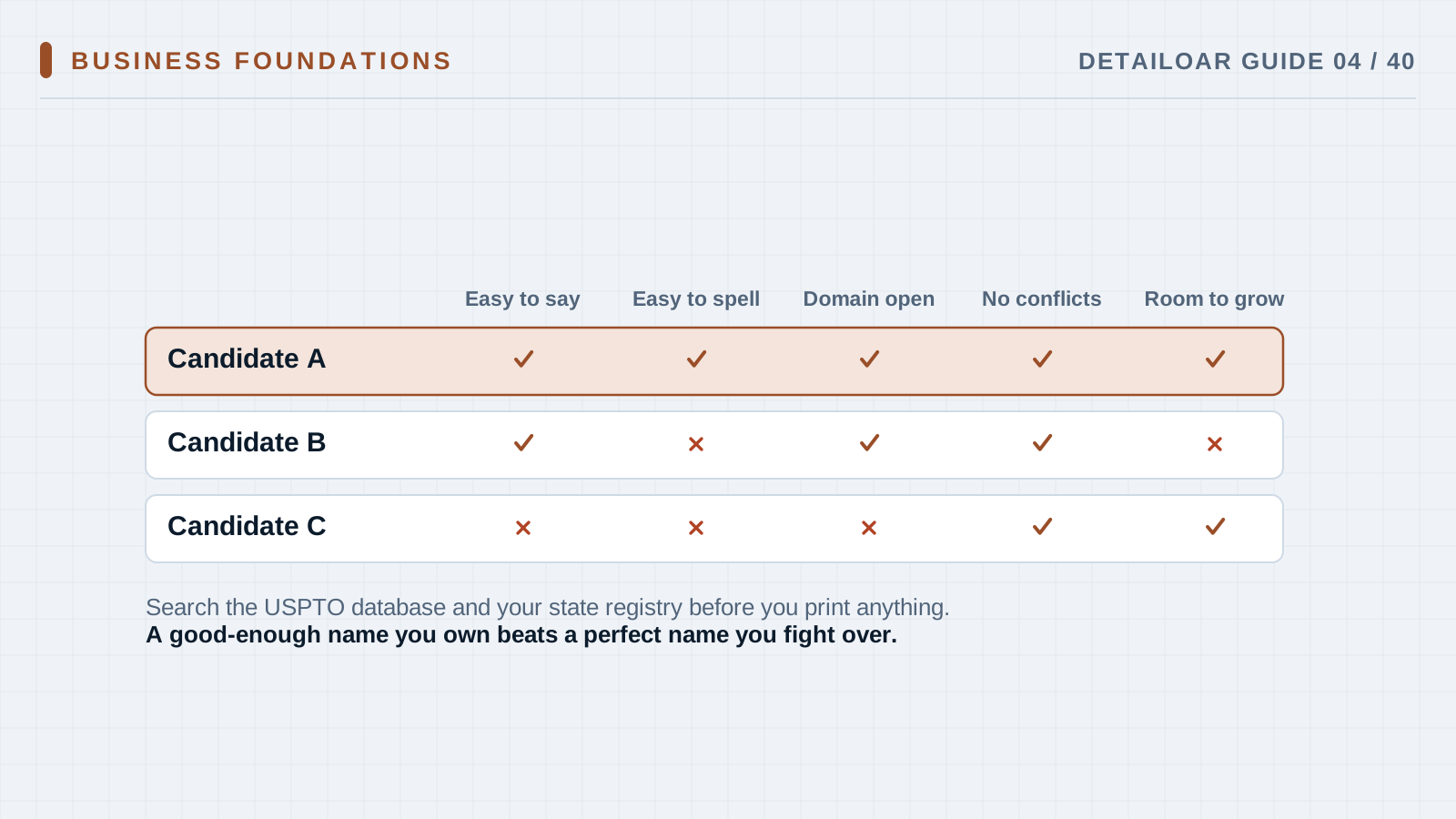
Score the five names for clarity, pronunciation, memorability, search ambiguity, unwanted meanings, and future fit. Make five more only if none survive.
-
Step 3 Say the survivors aloud
Say each front-runner over the phone and ask a neutral tester to repeat and spell it. Then type it from memory and look at it in lowercase.
-
Step 4 Check registries and trademarks
Search the relevant entity registries and the USPTO system, then get qualified advice wherever conflict risk or the money at stake is meaningful.
-
Step 5 Check domains and handles
Favor a clear primary domain with no confusing punctuation. Note matching social handles, common misspellings, and what renewal costs.
-
Step 6 Write the position
Fill in: “For [customer], [name] provides [result] through [credible process], unlike [alternative].” Then cut any hype you can’t prove.
-
Step 7 Reserve before you print anything
Lock in the approved registration, domain, core handles, and email first. Only then order signs, uniforms, wraps, or print materials.
Reference
Use the detail when you need it.
How it works
A strong name is easy to say, easy to search, easy to remember, and flexible enough to cover the services you intend to sell. Positioning is the deliberate, customer-facing choice about who you serve, what result you own, and why your process is credible.
Terms used in this guide
- TrademarkA source identifier protected under applicable law. Registration and conflict analysis are legal questions, not guesswork.
- PositioningThe specific spot you want your offer to hold in a customer’s mind next to their alternatives.
Safety notes
- Name availability, entity registration, domains, and trademarks are separate checks, not one.
- Requirements vary by jurisdiction, so verify with the relevant registry and a qualified trademark professional before any major investment.
Common mistakes
- Assuming an open domain means the name is legally available.
- Forcing uniqueness with spellings nobody can guess.
- Tacking on premium, elite, or best without operational proof.
- Printing materials before the searches are done.
Troubleshooting
- The ideal .com is takenTry a clear modifier like your service area or “auto,” but don’t settle for a confusing domain; rethink the name if customers will keep mistyping it.
- Testers mix the name up with a competitorChange it before launch. A logo won’t fix confusion that happens out loud.
- A similar trademark turns upPause the spending and get qualified legal review; don’t assume you’re safe just because the spelling differs.
Finish
Check the result and close the loop.
What good looks like
- Customers can pronounce the name and spell it.
- Search results aren’t owned by some unrelated brand.
- The domain is short and defensible.
- The positioning names a customer and a real operational difference.
- The name has room for the service mix you’re planning.
Final checklist
- Constraints written
- Five names scored
- Phone and spelling test passed
- Registry and trademark searches on file
- Domain secured
- Positioning sentence approved
What to do next
- Put the chosen brand into your business settings once, centrally.
- Build a website that’s designed to convert.
- Keep the same name and contact details on every listing.
More
Continue only where it helps.
Learning paths with this guide
Start a Mobile Detailing Business13 guidesOpen a Detailing Shop11 guidesFrequently asked questions
Should the city be in the name?
It can add clarity if you’re staying local for good, but it can box in expansion or confuse people if the service area ever changes.
Do I need a trademark registration?
Not every business registers right away, but every owner should look hard at conflicts. A qualified professional can advise based on your geography and growth plans.
Should the domain exactly match?
Exact is simplest. If it’s taken, use a short, predictable modifier and say it out loud a few times before you commit.
Sources and review
Reviewed by DetailOAR Editorial Review on July 15, 2026. Verify current labels, interfaces, prices, and local requirements before acting.
Related field guides
 Marketing and SalesHow to Build a Detailing Website That Turns Visitors Into LeadsBuild a fast, credible detailing site that answers the questions buyers actually have, shows real work, and points every visitor to one clear next step.
 Marketing and SalesHow to Set Up and Improve a Google Business ProfileSet up an accurate, eligible Google Business Profile and keep categories, service areas, photos, services, reviews, and updates current without spammy tricks.
 Marketing and SalesLocal SEO for Detailers: A Beginner’s Step-by-Step GuideGet found locally with a technically sound site, genuinely useful service and area pages, consistent business data, honest reviews, and smart internal links.