
DetailOAR Field Manual · Business model
Mobile, Shop, or Hybrid: Choosing the Right Detailing Business Model
Weigh mobile, fixed-shop, and hybrid detailing side by side using real demand, your cash, travel, capacity, and the life you want around the work.
Save or use this guide
Contents
Start
Know the outcome.
You’ll pick one operating model for a 90-day test and know exactly what would justify changing it later.
Audience, time, and cost
Read this before you sign a lease or build out a vehicle. It’s also for the working mobile detailer who’s wondering whether a small bay would actually pay for itself.
Time and costGive the comparison about two hours. You shouldn’t spend anything beyond optional local travel; this is a decision exercise, not a shopping trip for equipment.
Before you start
Jot down your available cash, the monthly overhead you can safely carry, your weekly working hours, service radius, storage access, and whether local rules let you work at customer properties.
Tools and materials
- calculator
- map app
- worksheet or spreadsheet
- local competitor notes
- household schedule
- three realistic monthly budgets
Steps
Do the work in order.
-
Step 1 Start with one hard limit
Circle the limit you cannot change today: available cash, debt tolerance, work hours, weather limits, towing or driving comfort, or maximum commute. Write the other limits underneath; your first decision is already moving.
-
Step 2 Drop the first customer pin
Mark one place a likely customer lives or works, then build out at least three useful clusters. Add competitor locations, peak-hour drive times, and whether customers have legal access to water, power, and a place for you to work.
-
Step 3 Open three cost columns
Label them mobile, shop, and hybrid. Add vehicle or rent, utilities, insurance, fuel, maintenance, storage, waste handling, software, marketing, and a repair reserve to each one.
-
Step 4 Count the hours you can sell
Start with your available job hours. Subtract setup, travel, weather delays, cleaning, admin, and rework, then multiply the realistic jobs left by the contribution each one earns.
-
Step 5 Let the scorecard choose
Rate each option from one to five on customer convenience, weather control, security, storage, service quality, room to expand, and fit with your personal schedule. The highest useful score gives you a front-runner.
-
Step 6 Give the winner a reversible test
Choose the lowest-risk version of the leading model for 90 days. Set weekly lead and job targets, then add a review date before any long lease or big buildout.
Reference
Use the detail when you need it.
How it works
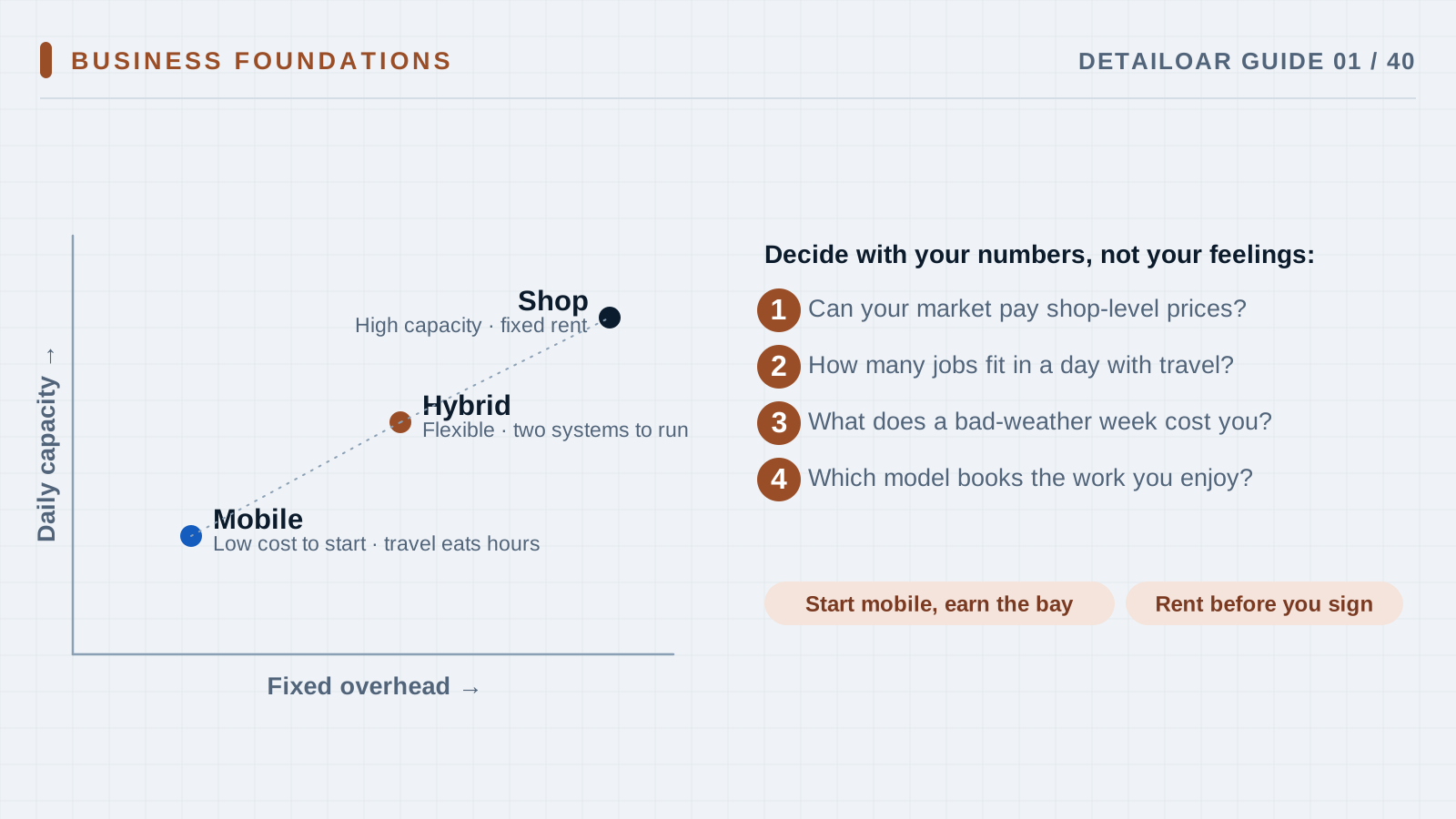
Mobile keeps fixed overhead low and brings the work to the customer’s driveway, but travel and weather quietly eat your sellable hours. A shop gives you controlled conditions, capacity, signage, and room for higher-ticket work; it also means rent and occupancy risk that never take a week off. A real hybrid assigns the right jobs to each setting on purpose, instead of paying for duplicate capacity without a plan.
Terms used in this guide
- Fixed overheadA cost, like rent or software, that’s still due even when no jobs get done.
- UtilizationThe share of your available working time that actually produces billable work.
Safety notes
- Don’t plan on storing chemicals in a passenger compartment until you’ve checked the product labels, SDS requirements, ventilation, securement, and local fire rules.
- Confirm the wastewater, parking, home-occupation, and commercial-use rules before you commit to a location.
Common mistakes
- Signing for a shop because it feels legit before demand is proven.
- Treating drive time like it’s free. It isn’t.
- Buying a big rig that’s hard to park or load safely.
- Calling an unplanned jumble of shop and mobile work “hybrid.”
Troubleshooting
- Two models score nearly the sameGo with the one that’s easier to walk back, and test the other through short-term bay rental or limited mobile days.
- The shop model only works at full capacityCut the premises cost or push back the lease; a launch forecast should survive a gradual ramp.
- Local mobile rules are murkyAsk your local planning, environmental, and public-works offices for written guidance before you operate.
Finish
Check the result and close the loop.
What good looks like
- The model can ride out a slow month without your personal bills going unpaid.
- Customers can tell at a glance where and how the service happens.
- Travel, weather, storage, and wastewater are all baked into your capacity math.
- The next investment waits for a measured bottleneck, not a mood.
Final checklist
- Operating model picked
- Monthly break-even worked out
- Service area or facility requirements verified
- 90-day targets written down
- Review date on the calendar
What to do next
- Validate demand with paid test offers.
- Build the startup budget around the model you picked.
- Design a service menu that fits the model’s real capacity.
More
Continue only where it helps.
Learning paths with this guide
Start a Mobile Detailing Business13 guidesOpen a Detailing Shop11 guidesSet Up DetailOAR8 guidesFrequently asked questions
Is mobile always cheaper to start?
Usually, but don’t assume it. A reliable vehicle, generator, water system, insurance, fuel, and travel time can add up to something close to a modest shared bay.
When should a mobile detailer add a shop?
When measured demand, weather losses, storage limits, or higher-value correction and coating work can carry the full occupancy cost with a safety margin to spare.
Can I change models later?
Yes. Favor portable equipment, short commitments, and documented performance so a later move rides on evidence instead of sunk cost.
Sources and review
Reviewed by DetailOAR Editorial Review on July 15, 2026. Verify current labels, interfaces, prices, and local requirements before acting.
Related field guides
 Business FoundationsHow to Validate Demand Before Spending MoneyFind out whether local customers will actually request and pay for specific detailing services before you commit to equipment, inventory, or rent.
 Business FoundationsHow to Build a Realistic Detailing Startup BudgetBuild a cash-first launch budget that splits required, deferrable, recurring, and contingency spending, then tells you how long you can survive.
 Business FoundationsHow to Set Up a Mobile Detailing Vehicle or TrailerLay out a mobile detailing rig around payload, securement, safe utilities, fast setup, wastewater control, and restocking you can repeat without thinking.