
DetailOAR Field Manual · Quality and efficiency
Final Quality Control, Customer Handoff, and Working Faster Without Cutting Corners
Put staged quality gates, a fixed final inspection route, an evidence-based handoff, and honest time studies to work — and raise throughput without deleting safety or quality.
Save or use this guide
Contents
Start
Know the outcome.
Install stage checks and a final customer handoff that catch misses early, explain limitations plainly, record completion properly, and show you where the safe speed lives.
Audience, time, and cost
Owners and technicians whose jobs run late, produce avoidable rework, or lean on one experienced person to remember every detail.
Time and costQC generally needs 20–40 minutes, depending on the service. Time studies cost nothing; better lighting, carts, or duplicate low-cost tools may earn their keep later.
Before you start
Write completion standards for each service, decide who may release a vehicle, and keep the approved estimate, inspection, changes, aftercare, and payment status where they can be found.
Tools and materials
- service checklist
- inspection lights
- timer
- handoff form
- clean QC towels
- aftercare sheet
- approved scope and inspection record
Steps
Do the work in order.
-
Step 1 Translate scope into gates
For each service, define setup, inspection, process, rinse and residue, drying and cure, final appearance, media, and handoff checks — each with a responsible role attached.
-
Step 2 Use in-process self-checks
After each zone or stage, clean the residue, inspect with suitable light and touch, mark it complete, and fix misses before the equipment gets packed away.
-
Step 3 Reset the vehicle for inspection
Pull the tools and protection for the final checks. Blow or drain the safe water traps, clean the glass, set mats, seats, and controls as agreed, check belongings and keys, and let required cure and dry time pass.
-
Step 4 Run an independent final route
Walk the exterior then the interior in the same order every time, comparing against the estimate and check-in. Use daylight and directional light on edges, seams, residue, function, touch points, and odors.
-
Step 5 Close records and money
Attach the after photos, product and batch notes, changes, signatures, invoice and payment status, aftercare, warranty, follow-up, and the owner of anything unresolved.
-
Step 6 Conduct the customer handoff
Walk them through the priorities, meaningful before-and-after evidence, remaining defects, care and cure instructions, keys and items, the balance, and the next sensible maintenance. Then invite questions.
-
Step 7 Measure process time by stage
Track setup, task stages, waiting, walking and searching, rework, admin, and handoff across several jobs — without ever using the timer to pressure workers.
-
Step 8 Improve one constraint at a time
Change layout, staging, standard work, safe parallel tasks, templates, training, or scheduling, then retest quality, safety, time, and worker load before standardizing.
Reference
Use the detail when you need it.
How it works
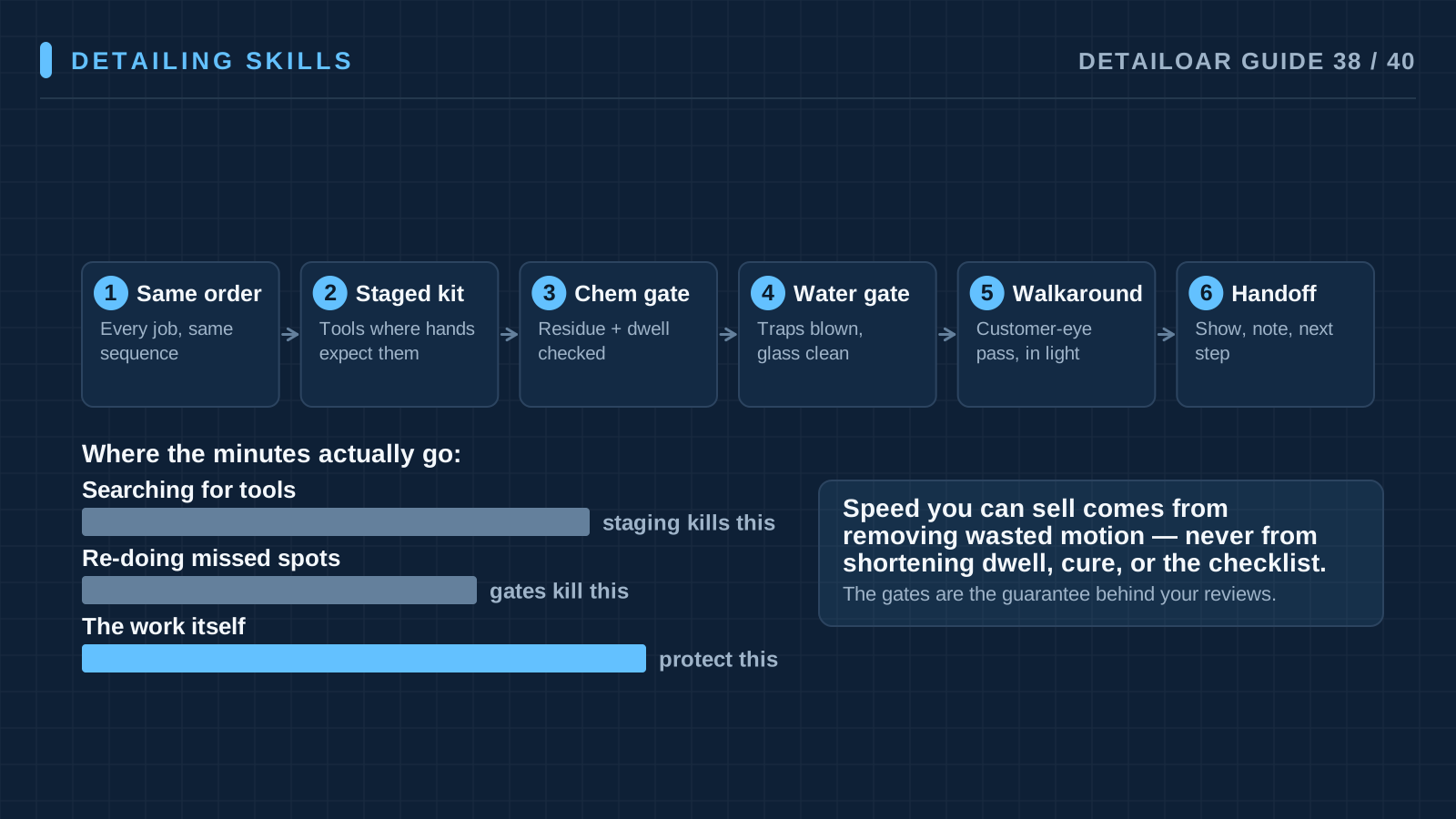
Real speed comes from cutting the searching, the walking, the waiting born of bad sequence, the handoff gaps, the duplicate entry, and the rework — not from rushing the work itself. Quality gates catch a miss near the stage that caused it. Final QC then checks the whole promise, independently, under the right conditions.
Terms used in this guide
- Quality gateA required check that has to pass before the work moves on or the vehicle goes anywhere.
- ReworkWork you do twice because the first pass didn’t meet the approved standard.
Common mistakes
- Final QC under a single light.
- Inspecting while tools still hide surfaces.
- Skipping the water-trap and glass checks.
- Aftercare delivered verbally and nowhere else.
- Timing only the technician’s hand motion.
- Calling a shorter dwell or cure an efficiency gain.
- Scheduling the handoff with no buffer in front of it.
Troubleshooting
- The same misses recurAdd an earlier stage gate, a visual standard, a tool position, a training example, and a named owner — a longer final inspection is the wrong fix.
- Jobs finish late despite accurate task timeMeasure setup, access, waiting, parts and material search, approvals, drying, cleanup, admin, and handoff. The constraint may sit outside the active detailing.
- Customer spots an issue at handoffAcknowledge it, inspect it together, compare it against scope and evidence, and correct it safely if appropriate — or set a documented resolution owner and time.
Finish
Check the result and close the loop.
What good looks like
- The scope and the QC checklist say the same thing.
- Misses get caught at the stage gates.
- The vehicle is dry, cured, and safe to release.
- Remaining defects are disclosed, not discovered.
- Every photo and approval is attached to the job.
- The customer receives exact aftercare.
- Efficiency gains cut waste — never required process.
Final checklist
- All stage gates passed
- Vehicle reset and safe
- Independent exterior and interior route passed
- Scope and exceptions compared
- Records and invoice complete
- Aftercare ready
- Customer handoff acknowledged
- Delay and rework data captured
What to do next
- Review the recurring misses every week.
- Update checklists only after a change has been tested.
- Price and plan capacity from actual stage time.
More
Continue only where it helps.
Frequently asked questions
Who should perform final QC?
A second trained person is worth a lot on complex work. Working solo? Take a reset break, then walk a fixed independent route instead of trusting your memory.
How can a beginner work faster?
Standardize first — layout, sequence, tool separation, checklists, and scope. Speed follows repeatability and fewer mistakes.
What should never be shortened?
Any required safety control, label dwell or rinse, ventilation, cure, drying, inspection, customer approval, or quality gate the service and conditions call for.
Sources and review
Reviewed by DetailOAR Editorial Review on July 15, 2026. Verify current labels, interfaces, prices, and local requirements before acting.
Related field guides
 Detailing SkillsThe Safe Exterior Wash Process From Start to FinishWash an exterior the controlled way: cool surfaces, a real pre-rinse, lubricated contact, dirty tools kept away from clean paint, a full rinse, safe drying, and a final inspection.
 Detailing SkillsThe Complete Interior Reset ProcessReset an interior in the right order: inspect, control belongings, pull the dry soil first, clean by material, hold back on moisture, do the glass, dry it out, and run final QC.
 Detailing SkillsCeramic Coating Preparation, Application, and Customer AftercareBuild a controlled coating environment, verify the paint and product suit each other, apply and level exactly by the manufacturer’s system, guard the cure, and hand over exact aftercare.