
DetailOAR Field Manual · Finance
How Much It Costs to Start a Detailing Business (Real Numbers)
Honest 2026 startup cost ranges for a detailing business — lean start, full mobile setup, or van build — plus the monthly costs that keep you open and a worksheet for your own number.
Save or use this guide
Contents
Start
Know the outcome.
You’ll know what starting actually costs at three realistic levels — lean, full mobile, and van build — and you’ll leave with your own number, not somebody’s YouTube number.
Audience, time, and cost
Anyone staring at a savings account wondering if it’s enough. It probably is — closer to the lean end than the influencer end.
Time and costPlanning is free. Expect a couple of hours to price your own list with real quotes instead of guesses.
Before you start
Decide which services you’d sell in month one. The single biggest cost mistake is buying gear for services nobody has booked yet.
Tools and materials
- spreadsheet
- calculator
- real supplier prices
- an insurance quote
- your personal cash number
Steps
Do the work in order.
-
Step 1 List gear for the services you’ll actually sell
Write your month-one service list, then the tools and chemicals each service truly requires. Nothing goes on the list because a video made it look essential.
-
Step 2 Price the list with real numbers
Pull current prices from suppliers you’d actually order from, and get a written insurance quote for your model and area. No memory, no guessing.
-
Step 3 Separate one-time costs from monthly costs
Equipment is one column. Insurance, fuel, software, chemical restock, and marketing are a different animal — they come back every month whether you booked work or not.
-
Step 4 Set working cash and contingency
Hold back enough to cover at least the first couple of months of those recurring costs, plus a contingency line for breakage and surprises. This is the money that keeps a slow March from becoming a shutdown.
-
Step 5 Pick your level on purpose
Compare your total against the lean / full mobile / van-build ranges and choose the smallest setup that can deliver your month-one services well. You can buy the upgrade with revenue; you can’t un-buy a trailer.
-
Step 6 Get the free paperwork right
When you formalize, the EIN comes free directly from the IRS — anyone charging you for one is reselling a free form. Registration and permit costs vary by state and city, so confirm yours locally.
Reference
Use the detail when you need it.
How it works
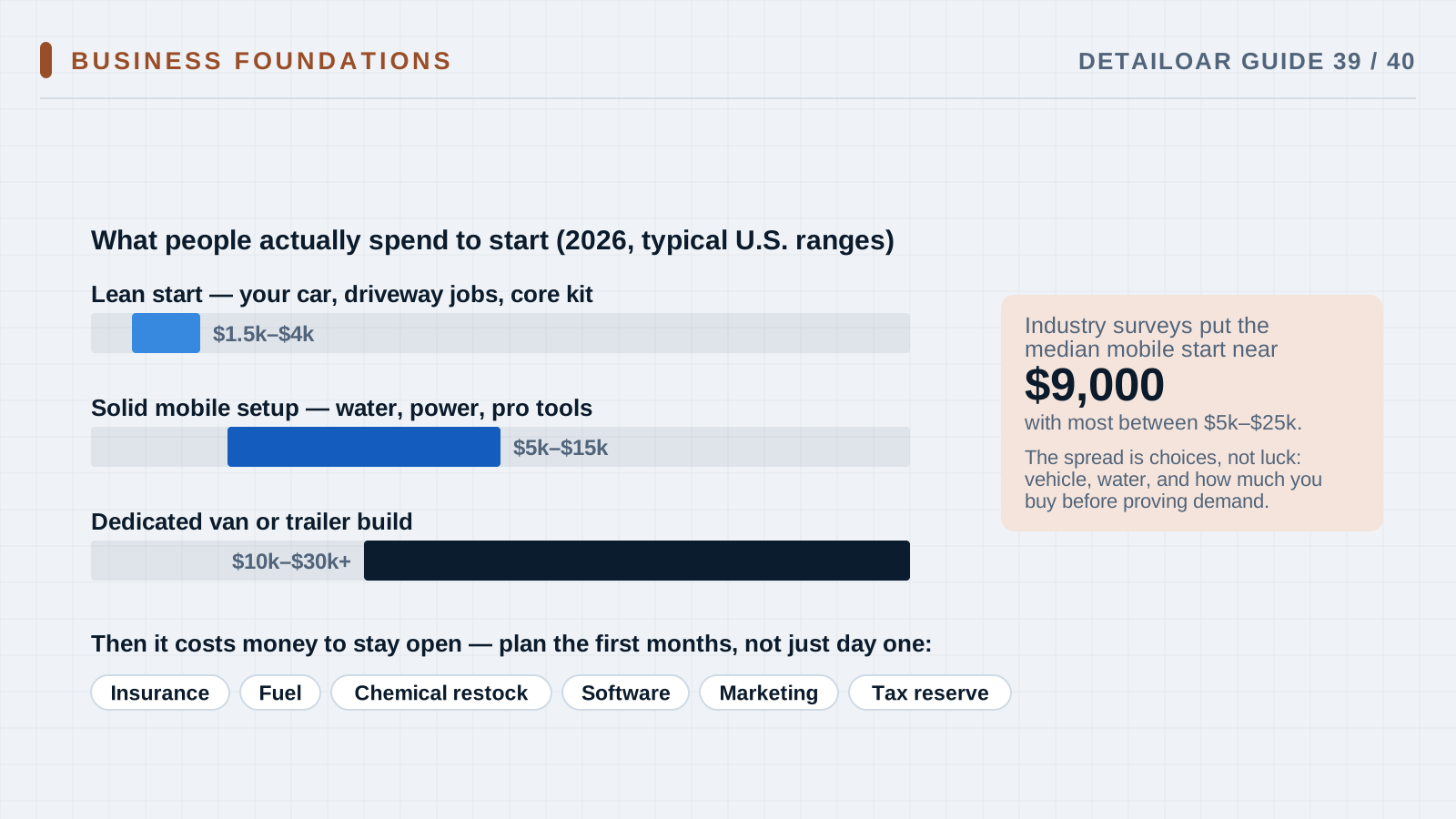
Ask ten detailers what it costs to start and you’ll get answers from $1,500 to $30,000 — and they’re all telling the truth, because they started different businesses. A lean start (your own car, a customer’s water and power, a tight kit of chemicals and towels) typically lands between $1,500 and $4,000. A solid mobile setup with its own water, power, and professional tools usually runs $5,000 to $15,000. A dedicated van or trailer build starts around $10,000 and climbs past $30,000 fast. Industry startup surveys cluster most mobile starts between $5,000 and $25,000, with a median near $9,000. The spread isn’t luck — it’s three choices: the vehicle, the water and power question, and how much you buy before you’ve proven anyone will pay you. Prices vary by market and change over time, which is exactly why this guide makes you build your own list instead of borrowing one.
Terms used in this guide
- Working cashMoney set aside to pay the business’s bills for the first slow months, separate from your startup purchases and your personal savings.
- ContingencyA reserve for the stuff you didn’t plan — a dead pressure washer, a rework, an insurance deductible. If nothing breaks, it becomes next quarter’s upgrade fund.
The guide’s current ranges for a lean start, a solid mobile setup, and a dedicated van or trailer build.
Your own car, a customer’s water and power, and a tight kit of chemicals and towels.
Its own water, power, and professional tools.
Starts around the lower marker and climbs past the upper marker fast.
Numbers, comparisons, and worksheet
Your own vehicle, a tight chemical and towel kit, customer-supplied water and power, and insurance.
Its own water, power, and professional tools.
A van adds capacity and convenience.
Your total includes cash you will deliberately not spend on gear.
Financing multiplies the pressure of every slow week.
Gear loses value the moment it’s yours.
Borrow against a validated calendar, not a dream.
Most detailers do better starting lean and letting revenue fund the growth.
Quote-backed startup worksheet
Price your own list with real quotes instead of guesses.
| Category | Quote 1 | Quote 2 | Chosen | Source-date |
|---|---|---|---|---|
| Tools and chemicals | ||||
| Insurance | ||||
| Fuel | ||||
| Software | ||||
| Chemical restock | ||||
| Marketing | ||||
| Working cash | ||||
| Contingency | ||||
| Registration and permit costs |
Safety notes
- Don’t finance a full build on projected income. Revenue you haven’t earned yet is a hope, not collateral.
- Insurance belongs in the day-one column, not the someday column — one claim without it can end the business before it starts.
Common mistakes
- Copying a YouTuber’s $30k build for a business that hasn’t booked its first job.
- Counting every dollar for gear and zero dollars for staying open.
- Skipping insurance to “add it once things pick up.”
- Paying a filing service for an EIN the IRS issues free.
Troubleshooting
- Your total is bigger than your savingsCut services, not corners: a shorter month-one menu shrinks the required kit honestly. Renting or borrowing rarely-used equipment beats financing it.
- Quotes vary wildly between suppliersNormal. Pick the mid-priced reputable option for consumables and spend the research time on the few tools you’ll hold for years.
- You already overboughtStop buying, sell what month one doesn’t need, and let the remaining gear earn its keep before anything new comes in.
Finish
Check the result and close the loop.
What good looks like
- A startup number you can defend line by line, built from quotes, not vibes.
- Working cash and contingency funded before any nice-to-have purchase.
- A month-one service list that every purchase traces back to.
- A plan that starts lean and lets booked revenue pull upgrades forward.
Final checklist
- Month-one service list written
- Every purchase priced from a real source
- One-time vs monthly costs separated
- Working cash covers the first slow months
- Contingency funded
- Start level chosen: lean, mobile, or build
What to do next
- Turn the list into a full budget with the startup-budget guide.
- Check the income math so the spend has a payback story.
- Validate demand before the big purchases leave the cart.
More
Continue only where it helps.
Learning paths with this guide
Start a Mobile Detailing Business13 guidesFrequently asked questions
What’s the absolute cheapest way to start?
Around $1,500–$4,000: your own vehicle, a tight chemical and towel kit, customer-supplied water and power, and insurance. It limits which jobs you can take, but it’s a real business, and plenty of strong shops started exactly there.
Do I need a van or trailer to be taken seriously?
No. Customers judge the work, the communication, and the reviews. A van adds capacity and convenience — buy it when bookings, not branding, demand it.
Should I finance the startup costs?
Be careful. Financing multiplies the pressure of every slow week, and gear loses value the moment it’s yours. Most detailers do better starting lean and letting revenue fund the growth. If you do borrow, borrow against a validated calendar, not a dream.
Why do the ranges vary so much by source?
Because “a detailing business” spans everything from a hatchback full of towels to a wrapped Sprinter with a generator. Ranges are context; your quote-backed list is the answer.
Sources and review
Reviewed by DetailOAR Editorial Review on July 15, 2026. Verify current labels, interfaces, prices, and local requirements before acting.
Related field guides
 Business FoundationsHow to Build a Realistic Detailing Startup BudgetBuild a cash-first launch budget that splits required, deferrable, recurring, and contingency spending, then tells you how long you can survive.
 Business FoundationsThe Essential Equipment and Chemical Buying ChecklistBuy a tight first kit of tools, PPE, chemicals, storage, and support equipment, with every item tied to a service you’ll actually sell.
 Business FoundationsHow Much Do Car Detailers Actually Make?Real detailing income numbers: what the federal wage survey says employed detailers earn, and the owner-operator math — jobs per week × average ticket − real costs — that decides what you keep.