
DetailOAR Field Manual · Finance
How Much Do Car Detailers Actually Make?
Real detailing income numbers: what the federal wage survey says employed detailers earn, and the owner-operator math — jobs per week × average ticket − real costs — that decides what you keep.
Save or use this guide
Contents
Start
Know the outcome.
You’ll know what employed detailers really earn, why owner income is a different question entirely, and how to run the four-variable math that predicts what you’d take home.
Audience, time, and cost
Anyone googling “do detailers make good money” and getting answers that range from minimum wage to $200k. Both are real; neither is the whole story.
Time and costFree. An hour with a calculator will tell you more than a week of income videos.
Before you start
Grab your local going rates for a full detail (call around or check competitor sites) and a rough idea of your costs. The math only works with your market’s numbers.
Tools and materials
- calculator
- your local service prices
- your cost estimates
Steps
Do the work in order.
-
Step 1 Write your target take-home
Pick the minimum monthly take-home this business needs to support. This is the answer the rest of the math has to produce.
-
Step 2 Work backward to required gross
Add your monthly business costs to the target, then add a tax reserve on the profit. That total is what the calendar has to produce in revenue.
-
Step 3 Set your average ticket from your market
Price a realistic mix from your own menu at local rates — maintenance washes alone rarely carry a full income; fuller details and high-value services lift the average.
-
Step 4 Divide and reality-check the job count
Required gross ÷ average ticket = jobs per month. Check it against real capacity: hours per job, travel time, weather days, and the admin hours nobody counts.
-
Step 5 Stress-test the slow season
Cut the monthly job count by a third and look at the result. If winter math breaks you, plans — maintenance memberships, fleet work — belong in the model now, not in January.
-
Step 6 Track it for real from job one
Run every job and expense through your system so the report shows actual average ticket, actual cost per job, and actual take-home — then adjust the levers monthly.
Reference
Use the detail when you need it.
How it works
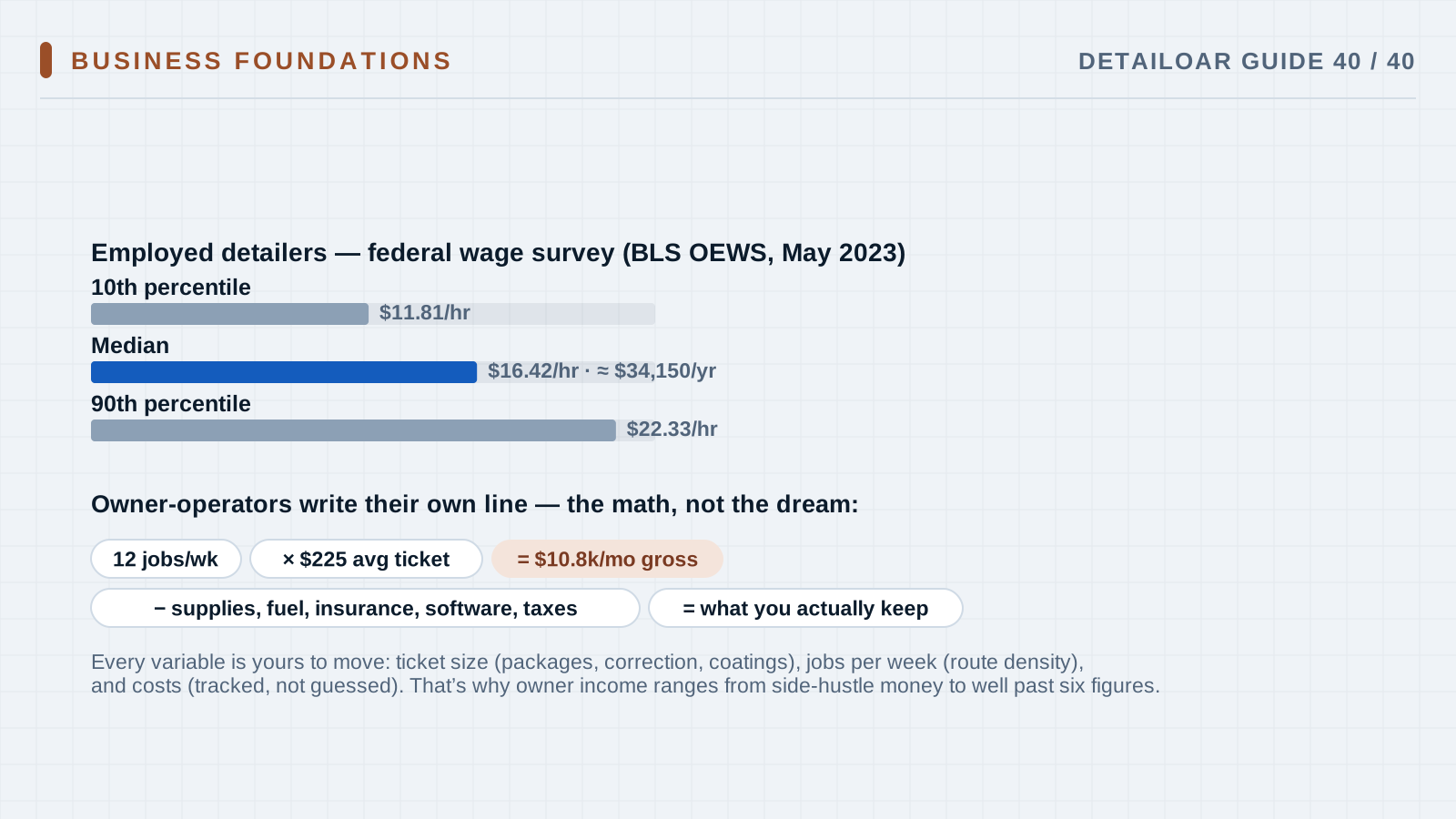
There are two different questions hiding in “how much do detailers make.” The first is about a job: the federal wage survey (BLS, May 2023) puts the median for employed vehicle cleaners and detailers at $16.42 an hour — about $34,150 a year — with the 10th percentile near $11.81 and the 90th near $22.33. Solid, knowable, and capped. The second question is about a business, and it has no ceiling because you set every variable: how many jobs a week you can deliver, what your average ticket is, and what it costs you to operate. Twelve jobs a week at a $225 average ticket is $10,800 a month gross. From that, take out supplies (commonly a high single-digit percentage of revenue), fuel, insurance, software, card fees — then remember roughly 15.3% self-employment tax applies to your profit before income tax. What’s left is yours, and every variable in that chain is moveable: richer service mix raises the ticket, route density raises the weekly count, tracked costs stop the leaks. That’s the honest reason owner incomes range from side-hustle money to well past six figures.
Terms used in this guide
- Average ticketTotal revenue divided by number of jobs. The single most powerful lever in the math — packages, correction, and coatings move it far faster than working more hours.
- Self-employment taxThe Social Security and Medicare tax (currently 15.3%) that self-employed people pay on business profit, on top of regular income tax. The IRS page in the sources has the current details.
U.S. federal wage survey, May 2023. Hourly figures are shown as reference points, not an owner-income forecast.
Numbers, comparisons, and worksheet
Jobs per week × average ticket − costs − tax reserve = take-home. Treat the example as arithmetic to check, not a guarantee.
What’s left is yours.
A strong average ticket from correction and coating work, not just washes.
Dense scheduling.
Controlled costs.
It usually isn’t a year-one result. For employees, the survey data says it’s rare.
Safety notes
- Treat any income promise — including the examples in this guide — as arithmetic to check, not a guarantee. Markets, seasons, and effort vary.
- Plan for taxes from the first job: self-employment income carries Social Security and Medicare obligations on top of income tax.
Common mistakes
- Comparing your owner math against an employee wage — or vice versa.
- Counting gross revenue as income and meeting taxes in April as a surprise.
- Building the model on peak-season weeks and calling it a year.
- Chasing more jobs when the cheaper win was a richer average ticket.
Troubleshooting
- The math says you need an impossible number of jobsYour ticket is too small for your goal. Rework the menu toward fuller details and add-ons before concluding the goal is wrong.
- Gross looks great but the bank account doesn’tCosts are leaking untracked. Log every expense for 30 days — supplies, fuel, fees — and recut the model with real numbers.
- Income swings wildly month to monthThat’s a mix problem, not a math problem: recurring maintenance plans and fleet accounts flatten the curve.
Finish
Check the result and close the loop.
What good looks like
- You quote the employee-vs-owner distinction instead of arguing about a single “detailer salary.”
- A written model: jobs per week × average ticket − costs − tax reserve = take-home.
- An average ticket built from your menu, not a forum thread.
- Monthly review of the three levers: ticket, count, costs.
Final checklist
- Target take-home written down
- Required gross computed with tax reserve
- Average ticket priced from your market
- Weekly job count fits real capacity
- Slow-season stress test passed
- Tracking live in your workspace
What to do next
- Build the prices behind your ticket with the pricing guide.
- Check the startup spend against the income story.
- Design the menu that moves the average ticket up.
More
Continue only where it helps.
Learning paths with this guide
Start a Mobile Detailing Business13 guidesFrequently asked questions
Is six figures realistic?
For owner-operators, yes — it generally takes a strong average ticket (correction and coating work, not just washes), dense scheduling, and controlled costs, and it usually isn’t a year-one result. For employees, the survey data says it’s rare.
What do employed detailers earn?
The May 2023 federal wage survey puts the median at $16.42/hour (about $34,150/year), with the top 10% above $22.33/hour. Dealership, rental, and repair-shop work make up most of those jobs.
Is detailing income seasonal?
In most climates, yes — spring and summer run hot, deep winter runs quiet. Owners flatten it with maintenance plans, interior-heavy winter offers, and fleet contracts. Budget on your slow-month math, and the good months take care of themselves.
Hourly rate or per-job pricing?
Customers buy outcomes, so quote per job — but track your effective hourly rate per service in your reports. It tells you which services deserve more of your calendar.
Sources and review
Reviewed by DetailOAR Editorial Review on July 15, 2026. Verify current labels, interfaces, prices, and local requirements before acting.
Related field guides
 Business FoundationsHow to Price Detailing Services Without GuessingSet a price that holds up, built from labor capacity, direct cost, overhead, risk, and the owner pay you’re aiming for, then check it against real jobs.
 Business FoundationsHow Much It Costs to Start a Detailing Business (Real Numbers)Honest 2026 startup cost ranges for a detailing business — lean start, full mobile setup, or van build — plus the monthly costs that keep you open and a worksheet for your own number.
 Business FoundationsHow to Design a Profitable Service MenuBuild a small service menu with clear outcomes, firm boundaries, capacity that fits, sensible add-ons, and standards your crew can deliver.