
DetailOAR Field Manual · Market validation
How to Validate Demand Before Spending Money
Find out whether local customers will actually request and pay for specific detailing services before you commit to equipment, inventory, or rent.
Save or use this guide
Contents
Start
Know the outcome.
You’ll finish this with real evidence, not vibes: who actually wants your work, roughly what they’ll pay, and how to reach them when you’re ready to sell.
Audience, time, and cost
Anyone who’s tempted to buy a full setup because of social-media interest, competitor pricing, or compliments from friends.
Time and costPlan on one week of interviews and one week for a small paid test. Keep promotion under $150 until strangers start requesting appointments or deposits.
Before you start
Pick one customer type and one narrow offer. Decide the most discounted test jobs you can safely take on, and give the test offer a clear end date.
Tools and materials
- phone
- spreadsheet
- simple landing page or form
- test offer
- interview questions
- lead tracking sheet
Steps
Do the work in order.
-
Step 1 Name one test customer
Finish one sentence: “I’m testing this for…” Add a real customer, need, and area, such as “commuters within 12 miles who need an interior reset after winter.”
-
Step 2 Save the first local alternative
Open one local result and note its services, prices, availability, complaints, and gaps. That is enough for this move. The same five-minute capture, done ten times over the next few days, is a real competitive table — you never need a research weekend.
-
Step 3 Ask one buyer about the last time
Ask one potential buyer about their last purchase, current frustrations, decision process, and preferred way to book. Save that conversation. One is a story; treat it as a pattern only after 10–15 of these, a couple at a time.
-
Step 4 Publish one specific test offer
Spell out what’s included, the starting price or range, your service area, available dates, and a real request or deposit action.
-
Step 5 Track every response
Log the source, response time, qualification, quote, outcome, and reason lost. Keep friends and family in their own column, away from ordinary prospects.
-
Step 6 Complete a small paid batch
Deliver three to five jobs. Record the real labor and supplies each one used, ask permission for photos, and invite candid feedback.
-
Step 7 Make a go, revise, or stop call
Compare your results against thresholds you wrote down beforehand, such as five qualified inquiries, three paid jobs, and a viable hourly contribution.
Reference
Use the detail when you need it.
How it works
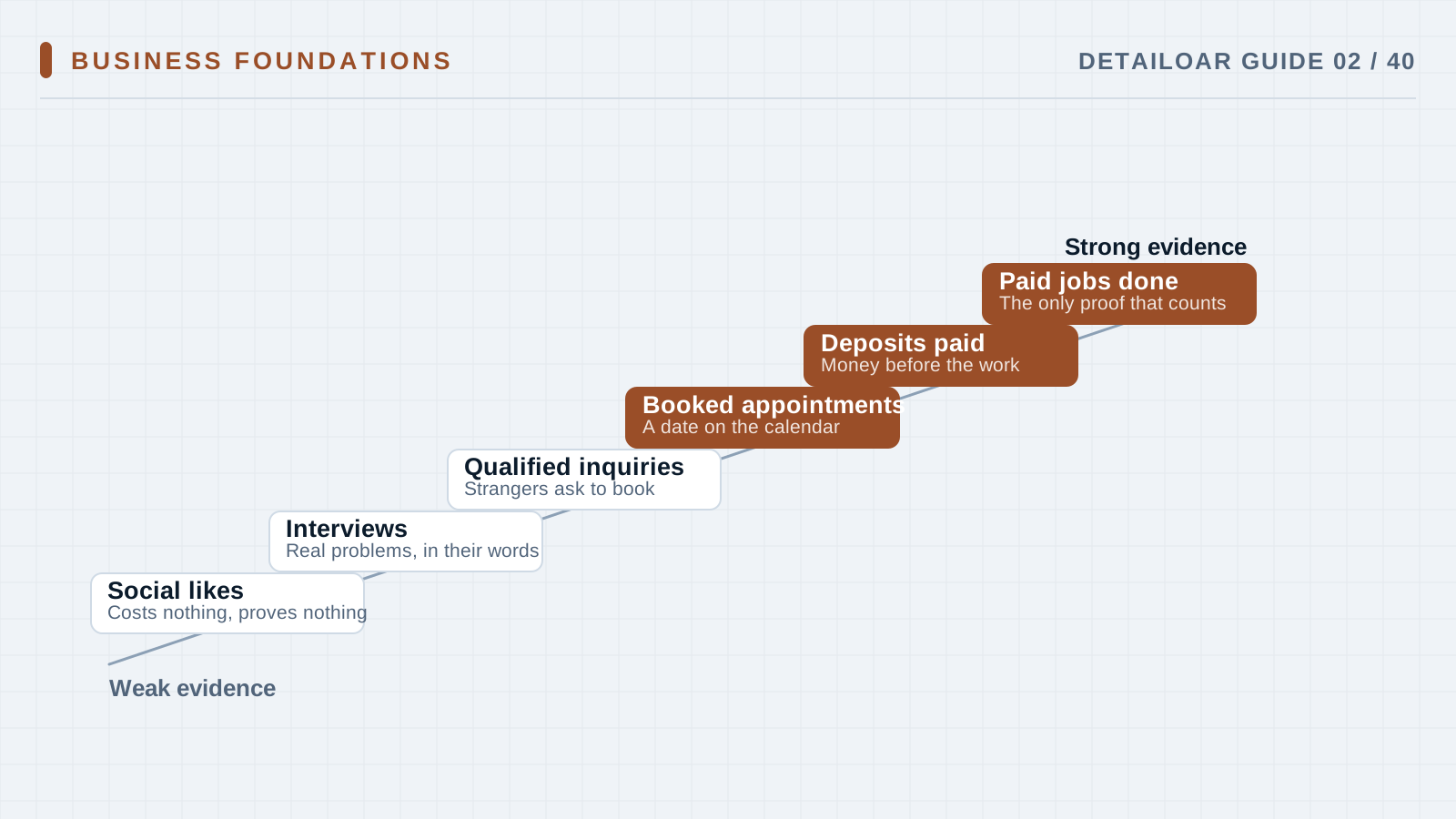
Interest isn’t demand. Evidence climbs a ladder, each rung stronger than the last: search behavior, interviews, qualified inquiries, scheduled appointments, deposits, and completed paid jobs. Validation should test one specific offer through one channel, not whether people generally “like clean cars.” They do. That proves nothing.
Terms used in this guide
- Qualified leadSomeone in your service area with a suitable vehicle, a real need, and a believable timeline to buy.
- Conversion rateThe share of prospects who take the next action you’re asking for.
Safety notes
- Don’t perform services you aren’t trained and insured to deliver.
- Be upfront about test-offer limits, and get permission before using customer photos or comments.
Common mistakes
- Counting likes as buying intent.
- Testing a pile of services and audiences at once.
- Pricing the test so low the result says nothing about normal demand.
- Buying equipment before you’ve recorded what jobs actually require.
Troubleshooting
- People inquire but don’t bookCheck your response time, scope clarity, trust signals, price, and available dates, then ask lost leads one neutral question about how they decided.
- Only friends are buyingRun the same offer through a channel where nobody feels personally obligated to support you.
- Demand shows up but margins don’tChange the scope, price, vehicle eligibility, or delivery model before you spend more on promotion.
Finish
Check the result and close the loop.
What good looks like
- Prospects describe the problem before you bring it up.
- At least a few strangers accept the tested price.
- One repeatable channel keeps producing qualified inquiries.
- Actual job time still leaves a contribution you can live on.
Final checklist
- One audience and one offer defined
- Ten or more interviews done
- Test offer published
- Sources and outcomes tracked
- Paid jobs timed and costed
- Decision threshold applied
What to do next
- Write the one-page plan using assumptions you’ve now validated.
- Set your starting service menu.
- Build a budget that splits must-haves from later purchases.
More
Continue only where it helps.
Learning paths with this guide
Start a Mobile Detailing Business13 guidesOpen a Detailing Shop11 guidesGet Your First 20 Customers9 guidesFrequently asked questions
How many interviews are enough?
Ten to fifteen focused interviews usually surface the repeated patterns. Keep going if the answers stay inconsistent or your audience is broad.
Should validation jobs be free?
Usually no. A modest real payment is stronger evidence, and it shows you what paying customers expect. Save free work for controlled skills practice.
What if competitors are busy?
That’s a clue, not proof. Check whether their customers, pricing, location, and services actually match the offer you can deliver.
Sources and review
Reviewed by DetailOAR Editorial Review on July 15, 2026. Verify current labels, interfaces, prices, and local requirements before acting.
Related field guides
 Business FoundationsMobile, Shop, or Hybrid: Choosing the Right Detailing Business ModelWeigh mobile, fixed-shop, and hybrid detailing side by side using real demand, your cash, travel, capacity, and the life you want around the work.
 Business FoundationsHow to Write a One-Page Detailing Business PlanTurn your customer, offer, operations, marketing, and money assumptions into a one-page plan you’ll actually use to steer weekly decisions.
 Business FoundationsHow to Design a Profitable Service MenuBuild a small service menu with clear outcomes, firm boundaries, capacity that fits, sensible add-ons, and standards your crew can deliver.