
DetailOAR Field Manual · Chemical safety
Chemical Safety: Handling, Storage, and Disposal for Detailers
Build the safety system every detailing product assumes you have: an SDS folder, label-first habits, matched PPE, labeled bottles, compatible storage, controlled wash water, and legal disposal.
Save or use this guide
Contents
Start
Know the outcome.
Set up the handful of habits — SDS folder, label-first use, matched PPE, labeled bottles, compatible storage, controlled wash water, legal disposal — that keep chemicals working for you instead of against you.
Audience, time, and cost
Every detailer, from the first bottle onward — and any owner who lets employees or helpers touch product.
Time and costThe first full setup commonly takes an afternoon. After that the cost is minutes per new product — trivial next to one chemical injury, ruined interior, or stormwater fine.
Before you start
Gather every chemical you currently own in one place, note which ones are missing labels or data sheets, and look up your local stormwater and household-hazardous-waste rules before deciding where anything gets rinsed or discarded.
Tools and materials
- SDS folder, paper or digital
- chemical-resistant gloves
- splash-rated eye protection
- labeled spray bottles
- spill absorbent
- blank container labels
- dedicated chemical storage bin or shelf
- your local stormwater and disposal rules
Steps
Do the work in order.
-
Step 1 Build the SDS folder first
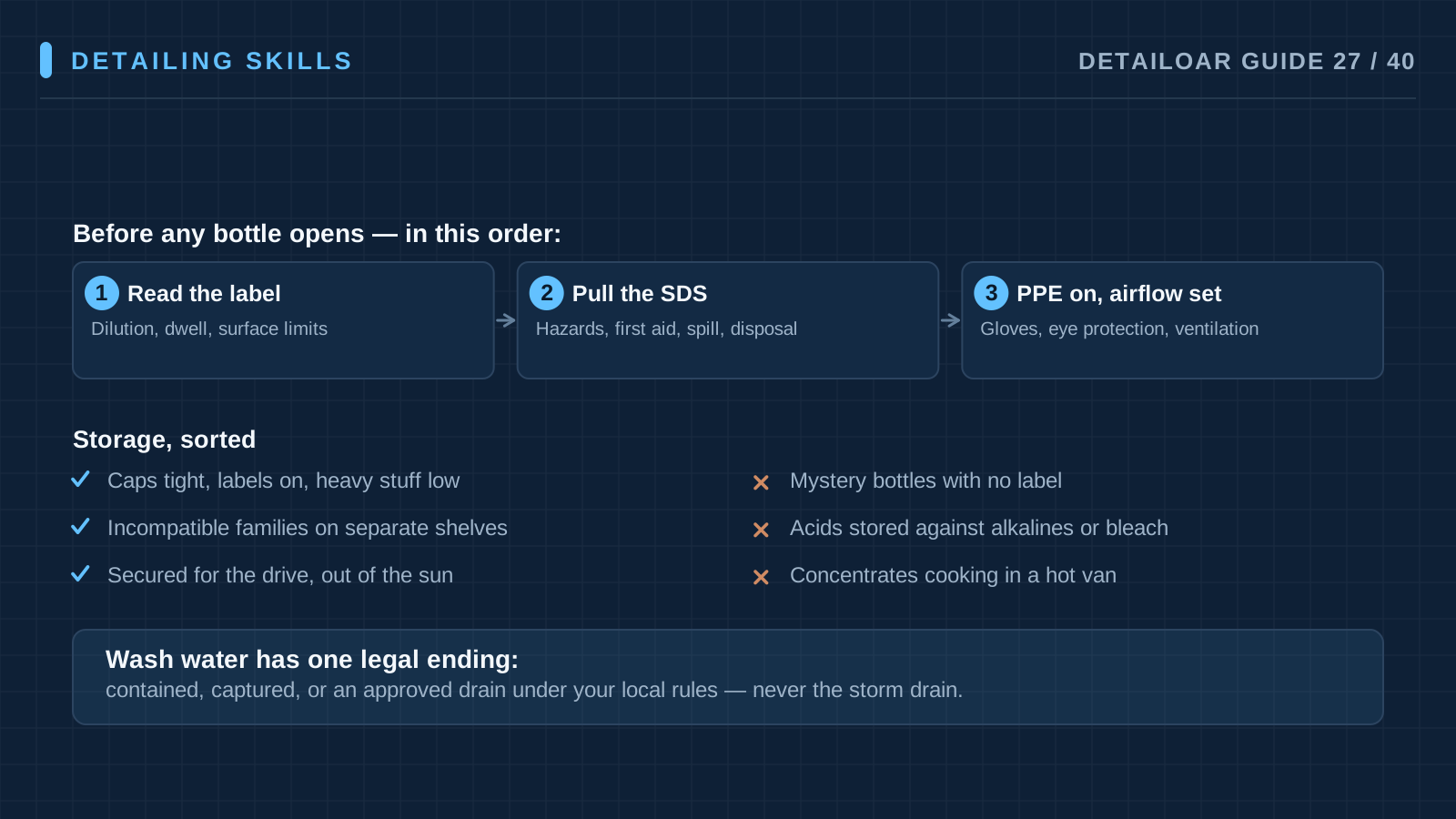
Collect the current safety data sheet for every chemical you own — from the product page, the manufacturer’s site, or the seller. Keep them in one folder, paper or digital, reachable during work hours, and drop sheets for products you no longer carry.
-
Step 2 Read the label like a procedure
Before first use, read the full label and the SDS sections on hazards, dilution, dwell, surface limits, PPE, first aid, and storage. Copy the dilution and dwell onto your own job card if that helps — the label stays the authority whenever the two disagree.
-
Step 3 Match PPE and ventilation to the product
Put on what the label and SDS actually require — commonly chemical-resistant gloves and splash-rated eye protection for wet work — and arrange airflow that carries vapors away from your face, not past it. If a required control is missing, the job waits until it exists.
-
Step 4 Label every secondary container
Mix only in clean, compatible containers, add product to water unless the label directs otherwise, and never guess ratios. Write the product name and dilution on every spray bottle the moment it’s filled — an unlabeled bottle is a hazard, and in a workplace it’s a compliance failure.
-
Step 5 Store by compatibility, temperature, and height
Follow each SDS for storage temperature and neighbors. Keep incompatible families apart, caps tight, heavy and corrosive products low, and everything that rides in a vehicle secured — and keep all of it away from food, kids, pets, and ignition sources.
-
Step 6 Control spills and wash water
Keep absorbent and gloves where the work happens and follow the SDS spill section when something lets go. Keep rinse water and chemical runoff out of storm drains — they usually run to waterways untreated. Use containment, capture, or an approved discharge point per your local rules.
-
Step 7 Dispose of leftovers by the rules
Never pour concentrates, solvents, or unknown mixtures down any drain. Check the label and SDS disposal sections, then route leftovers through your local household-hazardous-waste or business-waste program. Keep the record when disposal is part of commercial work.
Reference
Use the detail when you need it.
How it works
Almost every detailing chemical is safe when the label is followed and hazardous when it isn’t — the product doesn’t know whose shop it’s in. The system that keeps you safe is boring and repeatable: one folder of safety data sheets, a label-first habit before any new product is used, PPE matched to the sheet instead of the mood, secondary bottles labeled the moment they’re filled, storage sorted so incompatible products never meet, and a decided answer for where spills, rinse water, and leftovers legally go. None of it takes talent. All of it takes deciding once, then not renegotiating with yourself on a busy day.
Terms used in this guide
- SDSThe manufacturer’s safety data sheet — the standardized document covering one product’s hazards, PPE, first aid, storage, spill response, and disposal.
- Secondary containerAny bottle or sprayer you fill from a larger concentrate. It needs its own name-and-dilution label the moment product goes in.
Common mistakes
- Buying products faster than you collect their data sheets.
- Trusting scent or color to identify an unlabeled bottle.
- Storing acids and alkalines shoulder to shoulder.
- Letting concentrates ride loose in a hot vehicle.
- Rinsing “just soap” toward a storm drain.
- Pouring old product down the shop sink to free the shelf.
Troubleshooting
- A product has no label or the label is unreadableTake it out of service. Don’t sniff-test or guess — if you can’t match it to its SDS with certainty, hold it for proper disposal and replace it.
- Someone shows symptoms during chemical workStop, get them to fresh air, and follow the SDS first-aid section for that product. Call emergency services or poison control when symptoms are significant or uncertain — and bring the SDS or label to the call.
- A spill is bigger than your absorbentKeep people and ignition sources away, ventilate if it’s safe to, and follow the SDS spill section. Beyond what you’re equipped and trained for, call the local hazardous-response line instead of improvising.
Finish
Check the result and close the loop.
What good looks like
- Every product has a current SDS on file.
- Every spray bottle carries a name and a dilution.
- PPE matches the label, not the mood.
- Incompatible products never share a shelf or a bin.
- Wash water has a planned, legal destination before the job starts.
- Disposal goes through documented channels.
Final checklist
- SDS folder current and reachable
- Labels read before first use
- PPE and ventilation match the SDS
- Secondary containers labeled
- Storage sorted by compatibility
- Spill absorbent stocked
- Wash-water plan confirmed
- Disposal route documented
What to do next
- Run the safe exterior wash process with these controls in place.
- Attach SDS links to your chemical inventory so the sheet is one tap away on site.
- Re-check the folder whenever a new product enters the kit.
More
Continue only where it helps.
Frequently asked questions
Can I mix two products to make a stronger cleaner?
No — unless the manufacturer explicitly permits that exact combination. Some common mixtures create dangerous gases. If the label doesn’t authorize it, mixing is off the table.
Where do I find the SDS for a product?
Manufacturers publish them. Check the product page, search the manufacturer’s site for the product name plus “SDS,” or ask the distributor you bought from. A product whose SDS you can’t obtain is a product worth replacing.
Can wash water go into the storm drain?
Assume no. Storm drains typically flow to waterways untreated, and many jurisdictions prohibit process water in them entirely. Use containment or capture, and follow your local stormwater and sewer authority for where wash water may legally go.
Do “green” or “eco” products still need PPE?
Read their labels like any other product. A certification such as EPA Safer Choice speaks to ingredient screening — it doesn’t rewrite the label’s handling directions. Dilution, dwell, and any stated PPE still apply.
Sources and review
Reviewed by DetailOAR Editorial Review on July 15, 2026. Verify current labels, interfaces, prices, and local requirements before acting.
- Occupational Safety and Health Administration — Hazard Communication
- Occupational Safety and Health Administration — Personal Protective Equipment
- Occupational Safety and Health Administration — Ventilation standard
- U.S. Environmental Protection Agency — Safer Choice
- U.S. Environmental Protection Agency — Vehicle maintenance and washing stormwater practices
Related field guides
 Detailing SkillsThe Safe Exterior Wash Process From Start to FinishWash an exterior the controlled way: cool surfaces, a real pre-rinse, lubricated contact, dirty tools kept away from clean paint, a full rinse, safe drying, and a final inspection.
 Detailing SkillsChemical Decontamination and Clay TreatmentDiagnose what’s actually bonded to the paint, treat it with compatible chemistry and well-lubricated mechanical work, then check for marring before any protection goes on.
 Detailing SkillsThe Complete Interior Reset ProcessReset an interior in the right order: inspect, control belongings, pull the dry soil first, clean by material, hold back on moisture, do the glass, dry it out, and run final QC.