
DetailOAR Field Manual · Partnership sales
How to Get Work From Dealerships, Fleets, Apartments, and Local Partners
Win local commercial accounts, and keep them, with a targeted offer, proof you can handle the volume, a paid pilot, written scope, and follow-up someone owns.
Save or use this guide
Contents
Start
Know the outcome.
Build a 25-account target list, do outreach that’s actually useful, deliver a paid pilot, and turn good work into a documented recurring relationship.
Audience, time, and cost
Owners with steady quality and real capacity who want commercial volume without swallowing vague scope, money-losing prices, or runaway payment terms.
Time and costResearch and outreach take weeks. Price the pilot properly; don’t disguise it as unlimited free work.
Before you start
Know your capacity, mobile and shop constraints, commercial insurance, payment needs, service-level limits, and which segment’s problem you can genuinely solve.
Tools and materials
- target account list
- commercial capability sheet
- CRM
- insurance evidence
- pilot scope
- commercial terms
- references or proof
Steps
Do the work in order.
-
Step 1 Choose one segment and problem
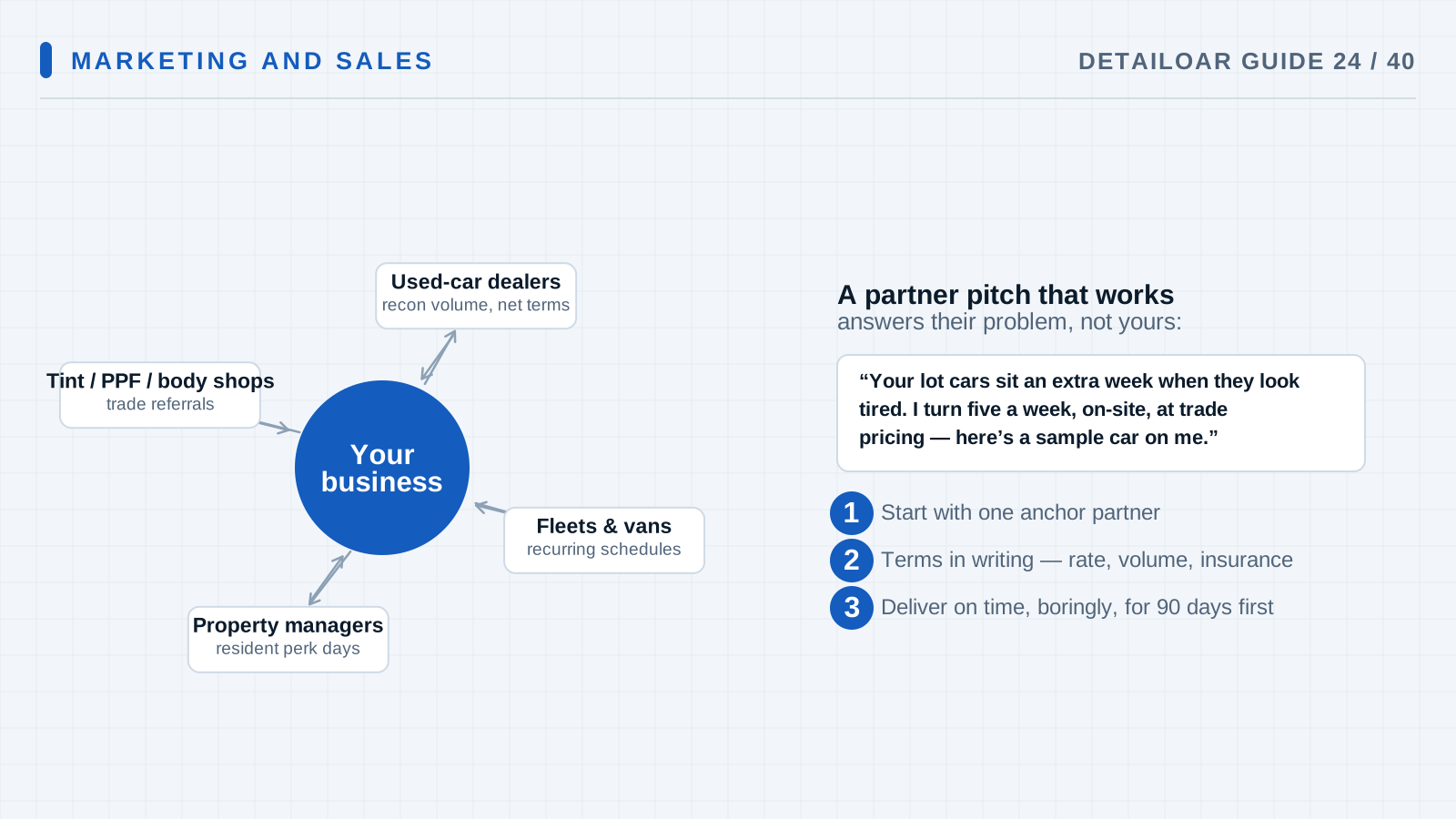
Pick dealership inventory, fleet appearance, apartment resident events, or reciprocal partner referrals, then name the operational pain you’d remove.
-
Step 2 Save one qualified account
Find one account that fits the segment and record why it qualifies, who may decide, and one permitted way to reach them. That earns this move; build to five next, and expand toward 25 only when the process stays useful.
-
Step 3 Create a capability sheet
Lay out the exact service, capacity, coverage, insurance, inspection and photo documentation, scheduling, billing, exclusions, and one relevant piece of proof.
-
Step 4 Make useful outreach
Open with a problem you noticed and a low-risk question: “We help [segment] achieve [operational result]. Could I ask how you currently handle [specific issue]?”
-
Step 5 Inspect the site and workflow
Walk the site. Confirm vehicle handoff, keys, traffic, water and power, wastewater, weather, security, the damage process, volume, a quality sample, your contact, and invoice approval.
-
Step 6 Price and run a paid pilot
Cap the vehicles, dates, scope, acceptance standard, communication, and payment, then document actual time and every exception.
-
Step 7 Convert with written terms
Put schedule, volume bands, price review, contacts, approvals, damage handling, cancellations, payment, confidentiality, and termination in writing, with qualified review.
Reference
Use the detail when you need it.
How it works
Commercial buyers care about predictable readiness, paperwork, communication, and clean billing far more than a long retail menu. And each segment hurts differently: inventory turn for dealers, uptime for fleets, an amenity for residents, or two-way customer value for partners.
Terms used in this guide
- PilotA small paid test with success criteria, run before any bigger commitment.
- Service levelThe agreed expectations for timing, quality, communication, and remedies on recurring work.
Common mistakes
- Blasting the same pitch at every business.
- Swapping margin for promised volume.
- Skipping the site walk.
- Starting recurring work on a handshake.
- Taking long payment terms without modeling the cash.
- Letting one account swallow your safe capacity.
Troubleshooting
- The buyer wants a rock-bottom rateWeigh committed volume, condition, access, billing, and scope. Offer a different, controlled service or walk away; don’t bury the loss.
- Vehicles show up dirtier than the pilot assumedDocument the condition, run the agreed exception or change process, and rework eligibility or price bands before you keep going.
- Invoices come in slowStick to the written approval and payment workflow, pause new exposure when that’s warranted, and get professional advice before extending credit.
Finish
Check the result and close the loop.
What good looks like
- The offer solves one segment’s specific problem.
- Capacity and turnaround promises stay conservative.
- Site safety and vehicle custody are spelled out.
- The pilot is small and paid.
- Commercial terms guard your cash flow and scope.
- Each side has one accountable contact.
Final checklist
- One segment picked
- 25 accounts researched
- Capability sheet done
- Outreach logged
- Site workflow checked
- Paid pilot measured
- Recurring terms reviewed
What to do next
- Set up the commercial account and contacts.
- Schedule the recurring visits with capacity limits on.
- Check each account’s margin and payments monthly.
More
Continue only where it helps.
Frequently asked questions
Should commercial work be cheaper?
Only when real efficiencies, like predictable volume, easy access, known condition, or simpler billing, genuinely cut your cost. Price the actual workflow and risk.
Should I offer a free demo?
Lean toward a limited paid pilot. If a strategic sample truly makes sense, put scope, value, permission, and decision criteria in writing first.
How many commercial accounts should I pursue?
Start with however many your capacity and cash flow can serve reliably. Don’t let one big account quietly squeeze out profitable existing customers.
Sources and review
Reviewed by DetailOAR Editorial Review on July 15, 2026. Verify current labels, interfaces, prices, and local requirements before acting.
Related field guides
 Marketing and SalesLead Response Scripts for Calls, Text Messages, and Direct MessagesAnswer every channel fast with scripts that qualify politely, lock in the next step, and record consent, without ever sounding like a robot.
 Business FoundationsDeposits, Cancellations, Weather, Damage, and Customer PoliciesWrite customer policies people can actually read: deposits, schedule changes, mobile weather, vehicle condition, valuables, damage documentation, and disputes.
 Marketing and SalesHow to Create Repeat Customers, Maintenance Plans, and Reactivation CampaignsBuild follow-up, rebooking, recurring maintenance, and respectful win-back campaigns around what the vehicle needs and what the customer agreed to.